
Review · ANNAPURNA BASE CAMP TREKS
Annapurna Sanctuary Trek ( 11 Days)
This is an Annapurna trek for people who like real trails. You’ll move from temple-rich Kathmandu to lake-town Pokhara, then into forests, stone stairs, and village nights that feel deeply local. And as the route climbs toward the base-camp zone, the Annapurna massif starts to show up in layers, not all at once.
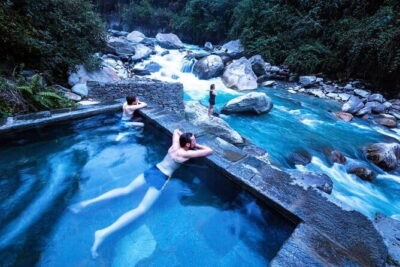
I like that the route mixes culture and views without making you rush. You get time in Kathmandu to visit major UNESCO sites, then you get village contact along the way, including Gurung settlements and the chance to unwind at the natural hot springs in Jhinu Danda. I also like the human side: the trek is run with a guide and porters, plus a medical kit and a steady focus on keeping things smooth.
One drawback to think about up front: this trek is strenuous, and it’s also weather-dependent. The higher altitudes mean you need a calm pace and good sense about how you feel each day.
In This Review
- Key things that make this trek tick
- From Kathmandu Temples to Trek-Ready Rhythm
- Pokhara Flight and the Start at Matkyu
- Upper Sinuwa and Chhomrong: Village Nights and River Views
- Hinku Cave, Deurali, and the Higher-Forest Build-Up
- Toward Machhapuchhre Base Camp: Where the Views Earn Their Pay
- Annapurna Base Camp at 4,130m: The Big Finale
- The Descent to Pokhara Lakeside and Evening Freedom
- Value and Budget Reality: Is $1,300 Good for You?
- What to Expect Day to Day on This Route
- A few practical considerations before you say yes
- Should You Book This Annapurna Sanctuary Trek?
- FAQ
- Where does the Annapurna Sanctuary Trek start?
- How long is the trek?
- Are domestic flights included?
- What kind of lodging do you get during the trek?
- What permits are included?
- Do you get a guide and porter support?
- Are meals included throughout the trip?
- Do I need travel insurance?
- What happens if weather is bad?
Key things that make this trek tick
- Kathmandu-to-Pokhara flights save you a big travel day and keep energy for trekking
- Jhinu Danda hot springs give you a real recovery moment in the middle of the hike
- Teahouses with full-board mean fewer daily decisions once you’re on the trail
- Experienced guide support including named guidance from Prajwol that people specifically appreciated
- Two base-camp goals with major sightlines toward Machhapuchhre and Annapurna
- Permits handled through ACAP and TIMS paperwork, so you’re not juggling admin mid-journey
More trails out of Kathmandu, boots ready
- Everest Base Camp Trek – 14 Days★ 5.0 · 1,499 reviews
- Everest Base Camp Trek★ 5.0 · 842 reviews
- Everest Base Camp Trekking★ 5.0 · 485 reviews
- Nagarkot Sunrise View and Day Hiking from Kathmandu★ 5.0 · 471 reviews
From Kathmandu Temples to Trek-Ready Rhythm
Your trip starts in Kathmandu, where the first change is mental: temples, courtyards, and UNESCO sites instead of trail time. You’re met at Tribhuvan International Airport, then transferred to a hotel (Kantipur Village or similar) on a bed-and-breakfast basis.
The sightseeing day is built around the Kathmandu Valley highlights. You’ll visit places like Kathmandu Durbar Square, Swayambhunath, Pashupatinath, and Bouddhanath, all tied to Nepal’s deep cultural roots. With seven UNESCO World Heritage Sites located in the valley, it’s a concentrated way to understand what you’re stepping away from before the mountains take over.
Practical bonus: after sightseeing, you also get briefed on trekking basics and how to configure your backpack for the days ahead. That’s the kind of small planning that helps you avoid the classic problem—carrying too much because nobody set a system early.
Pokhara Flight and the Start at Matkyu
Next you fly from Kathmandu to Pokhara in about 25 minutes. It’s a quick hop, but it matters because Pokhara is the staging point for Annapurna routes. From the air, you’ll land in a city that travelers come to for its lakes, and you’ll use that same base to roll into the trek.
Then comes the land transfer. A private vehicle or jeep takes you for about two hours to Matkyu, where trekking begins. The early walking is designed to ease you in with a climb through oak and rhododendron forests, plus that steady soundtrack of the Modi River alongside the trail.
Jhinu Danda is the first overnight, and it’s where the trek gets more memorable. You hike to the village area through dense forests and stone stairs, and if you want a reset after the day’s effort, the natural hot springs are right there. It’s one of those rare built-in recovery options that can make the next morning feel easier.
Upper Sinuwa and Chhomrong: Village Nights and River Views
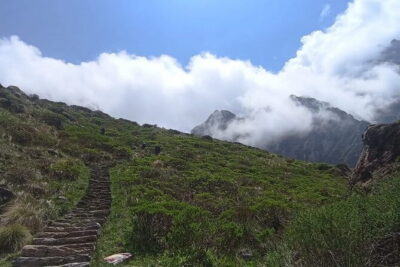
As you gain altitude, the route starts turning into classic sanctuary-trek scenery: steep moves, stone steps, and long, rewarding sightlines when the forest opens. One day you climb uphill for about an hour to reach Chhomrong village, a Gurung settlement where you can see daily life up close.
Then you drop to a suspension bridge over Chhomrong Khola. Crossing it gives you that fast-moving river perspective, and the view is the kind that makes you slow down without even meaning to. After that, the trail keeps climbing until you reach Upper Sinuwa, where the overnight sits at roughly 2,340 meters.
Later, as you work the return loop, you’ll come through Chhomrong again and spend the night there. That matters because Chhomrong is more than a transit point. It’s a place with traditional lifestyles and old village rhythms, so you’re not just passing through scenery—you’re sharing a night with people who live this terrain.
The takeaway for you: if you like trekking that feels human—smiles at tea shops, conversations near the lodge—you’ll enjoy how these village stops are treated here.
Hinku Cave, Deurali, and the Higher-Forest Build-Up
On the higher approach, you start to notice how the trail’s vegetation changes with altitude and moisture. The hike moves through dense forest before opening into drier stretches, and you get glacial-river views below when the tree cover lifts.
A notable landmark on this route is Hinku Cave, mentioned as important in early Annapurna I expeditions. Even if you’re not a history nerd, it helps to have something concrete to look for because it breaks the day into mental chapters instead of one long line of steps.
From there, the trek continues toward Deurali, with lunch along the way. It’s also a part of the trip where the walking can feel more strenuous than it sounds on paper, because you’re climbing while the air gets thinner.
Here’s the value of that pacing: you’re building gradually toward the base-camp zone rather than jumping straight to the dramatic elevations. That usually makes a difference for comfort, especially if you’re trying to avoid the “too fast, too soon” mistake.




Toward Machhapuchhre Base Camp: Where the Views Earn Their Pay
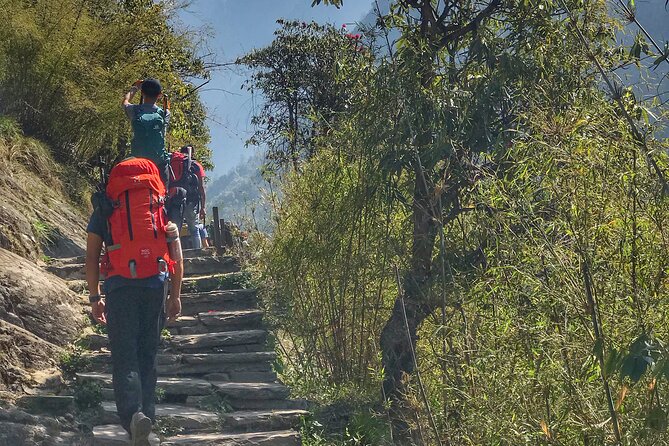
The walk toward Machhapuchhre Base Camp (often shortened to MBC) is where the trek’s personality turns sharp. Forest transitions continue, and you’ll pass through both dense and more open forest sections while the trail works its way higher.
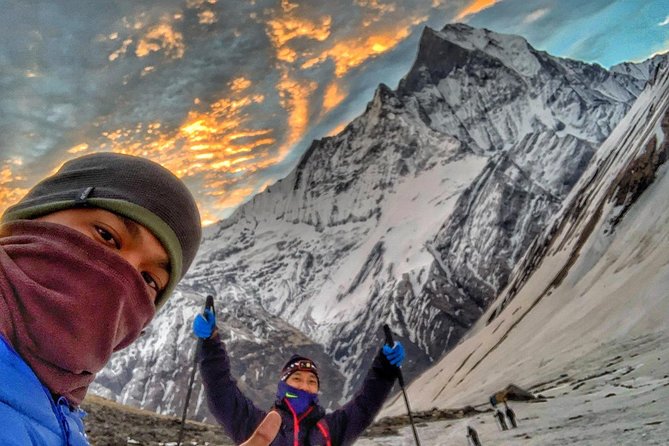
The itinerary repeatedly emphasizes that this route can be quite strenuous, and that’s realistic for the sanctuary-style terrain: steady uphill, altitude lift, and the mental demand of long days. The reward is the payoff view angle—Machhapuchhre and surrounding peaks become the focus, including strong sightlines from Machhapuchhre Base Camp itself.
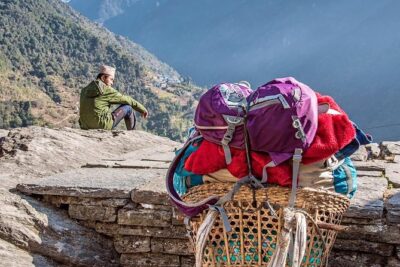
This is also where lodge life starts to feel less like convenience and more like part of the experience. You’ll sleep in teahouses/lodges on a twin-sharing setup on a full-board basis during the trek. That means meals are handled, so you can focus on hydration, rest, and watching the mountains change as light shifts.
If you love sunrise and morning stillness, this is the region where that habit pays off. The base-camp zone is often the moment you remember why people do long treks at all.
Annapurna Base Camp at 4,130m: The Big Finale
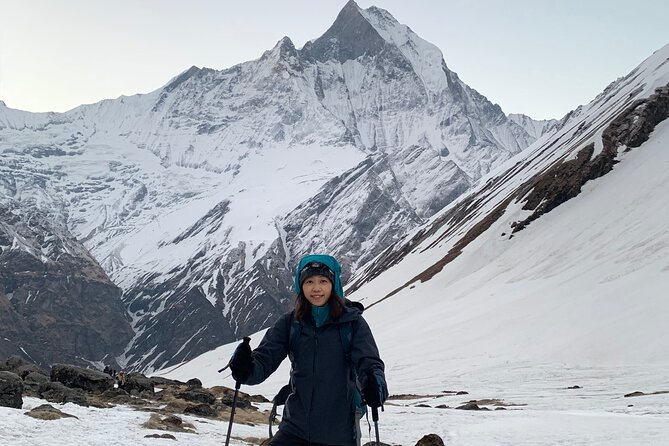
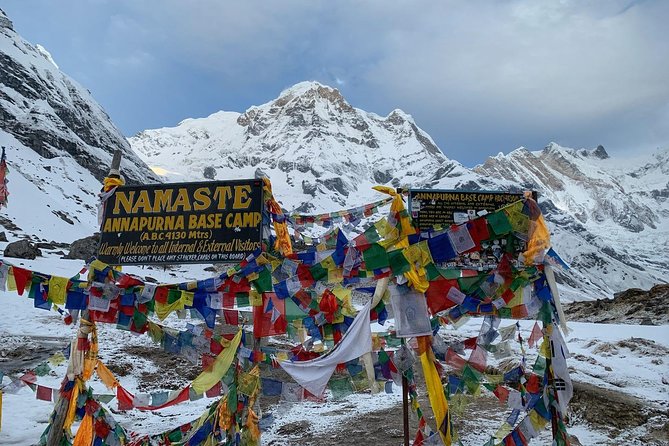
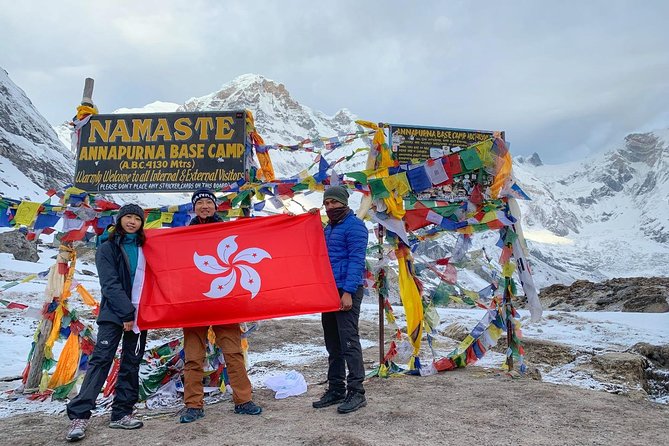
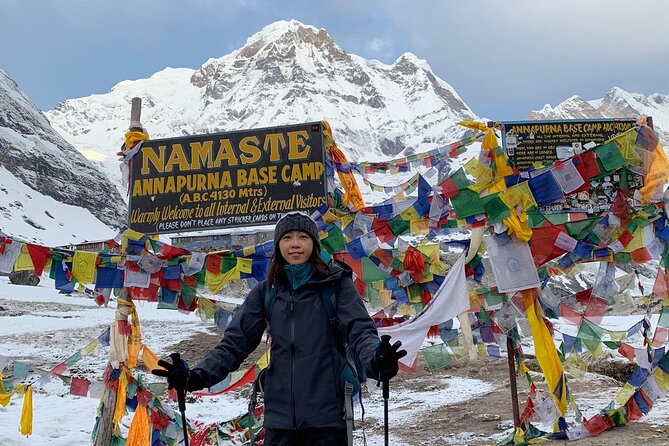
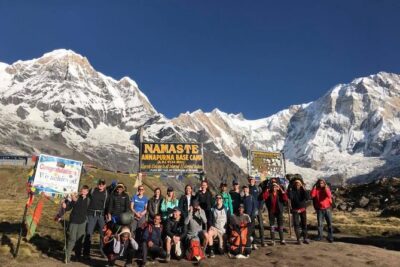
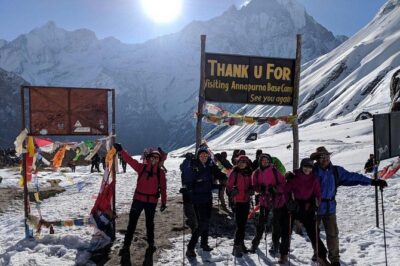
Eventually you reach Annapurna Base Camp, which sits at about 4,130 meters. From Machhapuchhre Base Camp, it’s roughly a two-hour hike along a wide, clear trail segment—so the final approach is less about scrambling and more about steady movement.
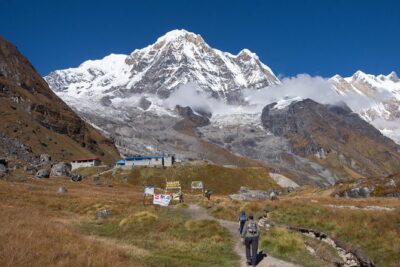
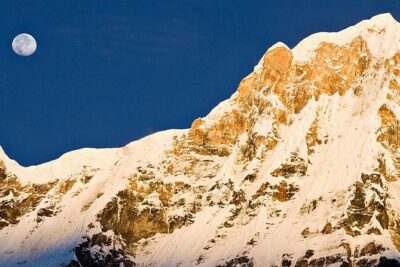
When you get there, the scenery is the main event. The view includes Annapurna South, and also Annapurna, Dhaulagiri, Machhapuchhre, Hiunchuli, Nilgiri, and other high Himalayas. That’s a serious checklist, but the real point for you is the sense of being at the foot of the massif: the peaks feel close enough to read, not just admire from a distance.
After spending quality time at the base camp, you retrace your route downward. You’ll descend through the higher areas back toward the Dhovan side, with the day structured to bring you gradually to lower elevations rather than cutting straight down in one dramatic drop.
One more practical note: because the route is popular and teahouses are widely available, you don’t have to worry about finding somewhere to sleep at each stage. That kind of infrastructure changes the trek from survival mode into guided rhythm.
The Descent to Pokhara Lakeside and Evening Freedom
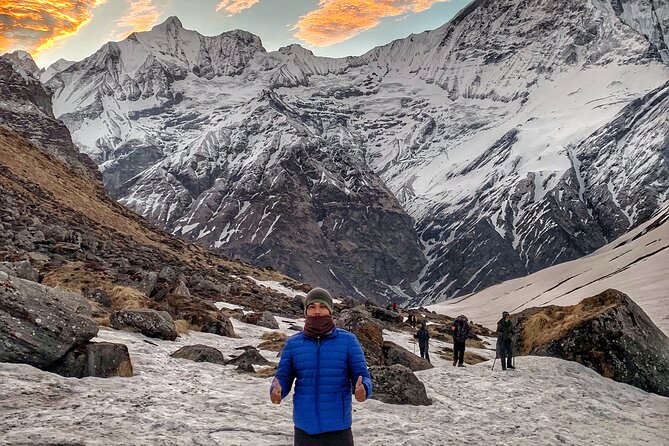
On the return, the days change from altitude focus to legs focus. The trek becomes mostly downhill at key points, with bamboo forests and a mix of short climbs and longer drops. You’ll cross the Chhomrong Khola bridge area again and continue through forested paths and stone steps.
Eventually you make your way back to Matkyu via Jhinu Danda. From there, a jeep takes you to Pokhara for the night. This is your reset day: you’re done with trekking intensity, but you’re not done being in Nepal.
Pokhara is also where the trip becomes lighter in tone. You can do boating on Fewa Lake, rent a bicycle, or just wander around with the city lights and music energy that many people come here for. And since Pokhara is closely tied to the idea of Nepal’s city of lakes, you get that thematic payoff without turning it into a separate vacation.
Then you fly back to Kathmandu, get escorted to your hotel, and finish with a farewell dinner before heading to the airport.
Value and Budget Reality: Is $1,300 Good for You?
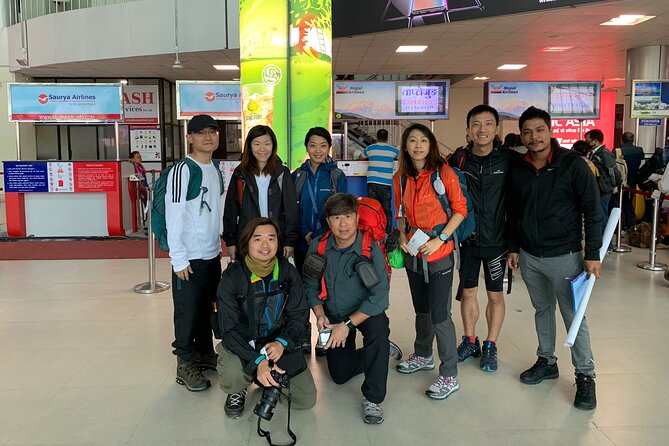
At $1,300 for an 11-day Annapurna Sanctuary Trek, the price looks “mid-range” only because the package includes a lot of the items that usually add up fast on trek trips.
Here’s what you’re getting value for:
- Two-way domestic flights between Kathmandu and Pokhara
- Hotels in Kathmandu and Pokhara (on bed-and-breakfast)
- Teahouse/lodge twin rooms with full-board during the trek
- An experienced English-speaking trekking guide
- Porter service throughout (1 porter for 2 clients)
- Permits and paperwork handled, including ACAP and TIMS
- Trek map, duffel, and trip completion certificate
- A Kathmandu sightseeing tour guide and entrance fees for that day
- Farewell dinner, plus a medical kit
What you’ll need to budget outside the package:
- International airfare and Nepal visa fee
- Travel insurance and rescue insurance
- Lunch and dinner in Kathmandu and Pokhara
- Extra night accommodation if you need it
- Personal expenses and tips for guides and porters
For you, the best part of the value isn’t just the math—it’s the reduced decision fatigue. When permits, meals, and porter logistics are handled, you can spend your attention on the trail and on altitude management. That’s the kind of “hidden value” that saves both time and stress.
Also note: it’s described as a private tour/activity, meaning only your group participates. Minimum 2 pax required, and pickup is offered, which helps if you prefer a clean start rather than navigating on your own.
What to Expect Day to Day on This Route
You’ll move through a rhythm that most sanctuary trekkers recognize: forest walking, stone stairs, village pauses, then base-camp focus. The biggest elevation highlights you can anchor your expectations around are:
- Upper Sinuwa around 2,340m
- Annapurna Base Camp around 4,130m
- Machhapuchhre Base Camp as the key higher stepping-stone before Annapurna’s big moment
You’ll also spend nights in teahouses/lodges on a full-board basis, so you’re not hunting for food choices each day. That keeps the trek from turning into a constant logistics problem.
As for guide quality, the trip’s strongest praise point is clear: people mentioned steady care and strong guidance. In particular, the guide named Prajwol was specifically credited with giving the information people needed and keeping things moving in a way that felt safe.
If you’re the kind of person who gets calm when you understand what’s coming next, you’ll appreciate that. And if you’re the kind of person who just wants to walk and not think too hard, the structure still helps you.
A few practical considerations before you say yes
First, accept that you’re doing a strenuous trek. This isn’t a flat path stroll, and it’s not designed to be “easy steps.” Build your pace around comfort, not ego.
Second, understand that it’s weather-dependent. The itinerary requires good weather, and the organizer notes that if cancellation happens due to poor weather, you’ll be offered a different date or a full refund. That’s worth factoring into your overall trip planning, especially if Nepal is only one stop in a larger itinerary.
Third, treat packing and planning as part of the experience. You’ll get trekking basics and backpack setup guidance early, which is meant to prevent common mistakes. Even if you’re experienced, it’s useful to compare your system with how the guide expects the trek to run.
Should You Book This Annapurna Sanctuary Trek?
If you want a classic Annapurna experience with real base-camp goals, village nights, and built-in support, this is a strong fit. The combination of Kathmandu cultural grounding, Pokhara lakeside recovery, and the two base-camp highlights makes the 11 days feel full without stretching into chaos.
Book it if:
- You’re comfortable with a strenuous multi-day trek
- You want guides and porters handling the “make it work” parts
- You care about cultural contact in Gurung communities, not only summit views
- You’d rather spend your planning time on you being ready, not on permits and logistics
Skip it or reconsider if:
- You’re very sensitive to altitude and want a gentler climb plan
- You only travel on fixed dates and can’t shift if weather causes changes
- You don’t want any guide structure at all
Overall, this trek earns its popularity the honest way: it’s demanding, it’s beautiful, and the package supports you so you can focus on walking and taking in the Himalaya.
FAQ
Where does the Annapurna Sanctuary Trek start?
The experience starts at Nepali Ghar Hotel, Amrit Marg 26, Kathmandu 44600, Nepal.
How long is the trek?
It’s listed as an 11-day trek (approximately).
Are domestic flights included?
Yes. The package includes two-way domestic flights by Buddha Air (Kathmandu to Pokhara to Kathmandu).
What kind of lodging do you get during the trek?
You stay in twin-sharing accommodations in teahouses/lodges during the trek on a full-board basis.
What permits are included?
The package includes paperwork for ACAP and TIMS.
Do you get a guide and porter support?
Yes. You get an experienced English-speaking trekking guide, and porter service throughout the trek (1 porter for 2 clients).
Are meals included throughout the trip?
Breakfast and some meals are included: breakfast (10), lunch (7), and dinner (7). Lunch and dinner in Kathmandu and Pokhara are not included.
Do I need travel insurance?
Travel insurance and rescue insurance are not included, so you’ll need to arrange it yourself.
What happens if weather is bad?
The experience requires good weather. If it’s canceled due to poor weather, you’ll be offered a different date or a full refund.
More Trekking Out of Kathmandu






More Tour Reviews in Kathmandu




Just Reviewed in Kathmandu
- Mountain Bike Tour
★ 5.0 · 3 reviews - Annapurna Panaroma
★ 5.0 · 3 reviews - Mount Everest Scenic Flight 50 Minutes
★ 5.0 · 3 reviews - Kathmandu : Swambhunath & Durbar Square Guided Half Day Tour
★ 3.3 · 3 reviews - Chandragiri Cable Car & Monkey Temple Tour – Private/Group
★ 5.0 · 3 reviews - Kathmandu: Shivapuri National Park Hiking Day Trip
★ 3.3 · 3 reviews
Annapurna Base Camp Treks, compared.
 ★ 5.0Annapurna base camp trek 5 DaysFrom $699252 reviews
 ★ 5.014-Day Private Annapurna Base Camp TrekFrom $1,090180 reviews
 ★ 5.0Annapurna Base Camp TrekkingFrom $1,779116 reviews
 ★ 5.0Annapurna Base Camp TrekFrom $935111 reviews
★ 5.0Annapurna Base Camp TrekFrom $1,350107 reviews
 ★ 5.0Kathmandu to Annapurna Base Camp (ABC) 5-Day TrekFrom $99102 reviews
 ★ 5.0Annapurna Base Camp Trek- 11 DaysFrom $99990 reviews
 ★ 5.0Annapurna Base Camp Trek 12 DaysFrom $80085 reviews
Browse the lists this tour appears in