
Review · ANNAPURNA BASE CAMP TREKS
Annapurna Sanctuary Trek – 14 Days
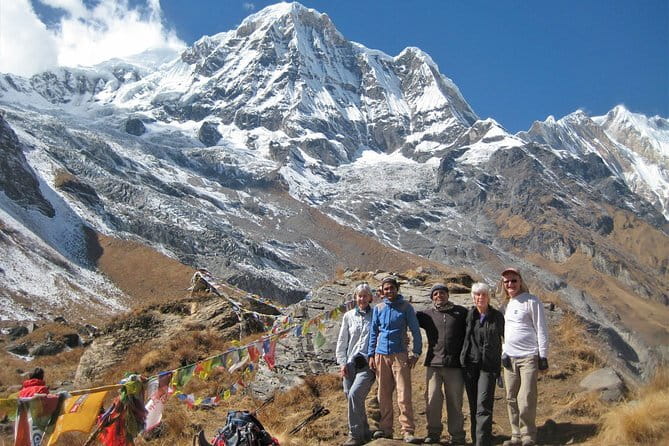
The sunrise over Annapurna feels unreal. This 14-day hike to Annapurna Base Camp blends easy cultural hits in Kathmandu with the big-movie scenery you get from Poon Hill, and I like that meals and teahouse lodging are handled for you during the trek. The one catch is that you still hike 6–7 hours a day on steep, rough trails and reach high altitude, so you’ll want solid fitness and patience if weather shifts the schedule.
I also appreciate how organized this trip is for real life: small groups (up to 12), an English-speaking licensed trek leader, an assistant leader, and porters sized to your luggage. You get useful gear like a down jacket and sleeping bag (returned at the end), plus a duffel bag, t-shirt, and a trekking map—so your packing list stays sane.
In This Review
- Key points worth planning around
- A 14-day Annapurna plan that mixes city culture with high mountain payoff
- Kathmandu UNESCO hits: Durbar Square, Pashupatinath, Swayambhunath, Boudhanath
- Kathmandu Durbar Square
- Pashupatinath Temple
- Swayambhunath (Monkey Temple)
- Boudhanath Stupa
- Getting to Pokhara and your first hiking day from Hile
- Ulleri: the step-test you earn early
- Ghorepani and Poon Hill: sunrise that’s worth the early alarm
- The Poon Hill climb
- Chhomrong to Bamboo to Deurali: the approach feels longer than it looks
- Chhomrong area
- Bamboo and what the cold bamboo forest teaches you
- Annapurna Base Camp: the day the Annapurna walls really show up
- Base Camp day (and why it feels “different”)
- The return down: downhill isn’t always easy on the knees
- Jhinu Danda: a rest stop with a reward
- Matque and Pokhara: your last hiking day turns into a full reset
- Flights back to Kathmandu and a farewell dinner
- Value check: what $860 really buys you, and what you should budget for
- What costs extra
- Gear notes that matter
- Single rooms
- A simple flexibility note
- Who this Annapurna Sanctuary trek suits best
- Who should think twice
- Book it or skip it: my call based on how this trip is built
- FAQ
- FAQ
- Is the trek price only for guidance, or are flights and hotels included?
- What meals are included during the trek?
- Are Annapurna Conservation Area (ACAP) and TIMS permits included?
- Do I need to bring a sleeping bag or down jacket?
- How high do you hike, and how much do you walk each day?
- How big is the group, and how much porter support do you get?
- Can I choose single-room accommodation?
- On which side of the plane should I sit for views?
Key points worth planning around
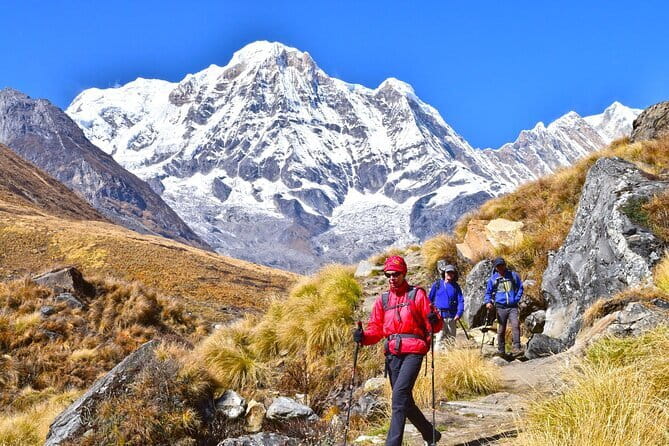
- Poon Hill sunrise timing: an early climb so you can actually catch the light over the Annapurna and Dhaulagiri ranges.
- UNESCO Kathmandu day with different religions: Durbar Square, Pashupatinath, Swayambhunath, and Boudhanath in one packed but manageable loop.
- Teahouse comfort is included: breakfasts in Kathmandu/Pokhara, but on-trail lodging and all trek meals are provided.
- Altitude is planned, not ignored: you’ll climb up toward 4,130m with daily ascents that add up.
- Small group support: a leader plus an assistant leader and a porter system that keeps you from hauling everything yourself.
More trails out of Kathmandu, boots ready
- Everest Base Camp Trek – 14 Days★ 5.0 · 1,499 reviews
- Everest Base Camp Trek★ 5.0 · 842 reviews
- Everest Base Camp Trekking★ 5.0 · 485 reviews
- Nagarkot Sunrise View and Day Hiking from Kathmandu★ 5.0 · 471 reviews
A 14-day Annapurna plan that mixes city culture with high mountain payoff
This trek works because it strings together three kinds of time, in a good order. You start with Kathmandu’s UNESCO sites so you’re not dropping into hiking mode before you’ve had a chance to breathe. Then you fly to Pokhara, ease into the trail through forest valleys and villages, and only later go after the big-ticket views near the Sanctuary and Annapurna Base Camp.
I like that the pace is relaxed in the sense that the day-to-day goals are realistic: you’re walking most days, but there’s a rhythm, and you’re not forced into extreme mileage. And because meals and teahouse stays are included on the trek, you spend less energy figuring out logistics and more energy paying attention to the mountain.
Kathmandu UNESCO hits: Durbar Square, Pashupatinath, Swayambhunath, Boudhanath
Your first full trek prep day is basically a crash course in Nepal’s sacred art and daily life. You’ll visit four UNESCO sites, each with its own vibe, and you’ll get a feel for how religious practice shapes the city.
Kathmandu Durbar Square
This palace complex used to be the royal heart under Malla and Shah kings. Look for pagoda-style temples, courtyards, and shrines such as Hanuman Dhoka Palace and Taleju Temple, plus the Kumari Ghar where the living goddess is kept. The 2015 earthquake caused damage, and restoration work is still part of what you see—so the place feels alive, not frozen in postcard time.
What to watch for: take a slow walk through the woodwork and stone carvings. Some details are easy to miss if you treat it like a quick photo stop.
Pashupatinath Temple
Next is Pashupatinath on the Bagmati River, one of Nepal’s most important Shiva temples. Non-Hindus can’t enter the main temple area, but you can watch rituals from the surrounding zones. The setting matters here: ghats and pilgrimage routines give the whole spot its power.
Practical tip: dress respectfully and keep your distance when ceremonies are happening.




Swayambhunath (Monkey Temple)
Swayambhunath is Buddhist, ancient, and perched up high for panoramic views. You’ll spot the white stupa and the Buddha’s all-seeing eyes, along with prayer flags and rotating prayer mechanisms. It’s also where you’ll see plenty of monkeys—so keep small items secured.
Why it’s worth it: the climb is short, but the reward is both spiritual atmosphere and city overview.
Boudhanath Stupa
Boudhanath is the big one for Tibetan Buddhism in Kathmandu. You’ll find prayer flags, monasteries nearby, and the all-seeing Buddha eyes on the stupa. After earthquake damage, restoration work has been done, and you can see how much effort goes into preserving sacred structures.
How to enjoy it: slow down and do the stupa walk at a calm pace. It’s one of the few spots where the day’s schedule feels like it wants you to breathe.
Getting to Pokhara and your first hiking day from Hile
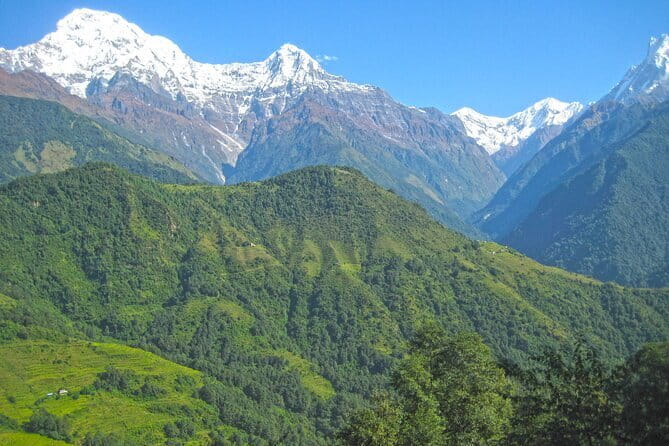
After the Kathmandu cultural loop, you fly to Pokhara early. You can improve your odds of mountain views by choosing a seat: sit on the right side on the Kathmandu to Pokhara flight. When you land, the views can include Dhaulagiri, Manaslu, Machhapuchhre, and multiple Annapurna peaks.
Then you drive to the trailhead area at Hile. This first walking day is a warm-up, moving through sub-tropical valley forest and along cliffside paths in places. After lunch you cross the Bhurungdi Khola by bridge and continue toward Tikhedhunga.
Ulleri: the step-test you earn early
Ulleri is famous for its steep climb of thousands of steps, with boulders and a constant upward pull. It’s not technically a long day in distance, but it’s a real stamina check. The good news is that you’re doing it before the higher, colder days—so your body is fresh enough to deal with it.
If you’re planning fitness: focus on leg endurance more than speed. The steps reward steady pacing.
Ghorepani and Poon Hill: sunrise that’s worth the early alarm
Ghorepani is where the trek energy shifts from “getting started” to “this is special.” The name is often explained as horse-water from earlier trading days, and today it’s a small base with shops and stalls for local goods.
You’ll spend the night in Ghorepani, but you’ll also move higher and take in panoramic views from the higher part of the village. Expect Annapurna South and Nilgiri mountains on clear days.
The Poon Hill climb
The next morning is built around an early ascent to Poon Hill viewpoint at 3,210m. This is the most popular sunrise stop in the Annapurna region, and it makes sense: from up here you can see a wide range of peaks, including close views of the Annapurna and Dhaulagiri ranges, plus more than 20 high mountains.
Once you’ve taken in the light, you return to Ghorepani for breakfast. Then you head east, climb a ridge, and descend through rhododendron forests. Along the way you pass waterfalls and eventually reach Tadapani for the night.
Possible drawback: the early start is real. If you hate mornings, pack patience. If you love sunrise photos, this is your moment.
Chhomrong to Bamboo to Deurali: the approach feels longer than it looks
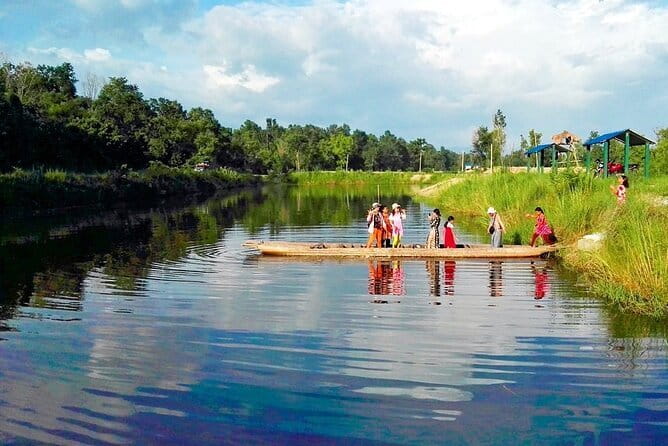
After Tadapani, the trail keeps handing you variety. You descend through a large rhododendron forest, then shift into terraced fields. There’s uphill work, plus bridges and viewpoints that break up the effort.
Chhomrong area
You’ll reach Chhomrong, a village right below the giant Annapurna massif. From here, you’re already in the part of the trek where the mountain presence gets closer. Expect stone steps and suspension bridges to become common features.
The next day goes from Chhomrong via a bridge crossing over Chhomrong Khola, uphill to Sinuwa, then through forest to Kuldihar. After that, the trail turns into an easier descent toward Bamboo.
Bamboo and what the cold bamboo forest teaches you
Bamboo is a moody place in the morning and evening. The bamboo forest can be damp and cold, and the uphill trail can feel steep at points. Later, near places like Himalaya Hotel, the forest opens up and you get stronger sun and views over the glacial river below.
Then it’s a steep climb through a drier forest to Hinku Cave, followed by descent to a river and ascent again to Deurali. Deurali is where the vegetation becomes sparse, so the views of cliffs, waterfalls, and the valley start turning into something close to dramatic.
What to expect: you’ll see more open sky and more exposed terrain as you gain altitude. That’s great for photos, but it means weather matters more.
Annapurna Base Camp: the day the Annapurna walls really show up
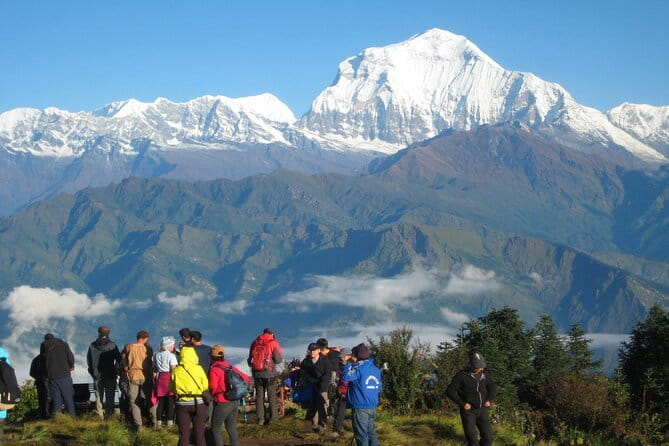
From Deurali you follow the valley trail on a steady climb, at times along rocky cliff edges. Later you head toward Machhapuchhre Base Camp, where you get strong views of Hiunchuli, Annapurna South, Annapurna I, Annapurna III, and other peaks like Gandharvachuli and Gangapurna.
Then you turn and ascend toward Annapurna Base Camp. This is the part that turns the trek from scenic hiking into the feeling of being inside the mountain range. The route is narrow and the panorama is wide, so you’ll spend a lot of time looking up while your legs do their work.
Base Camp day (and why it feels “different”)
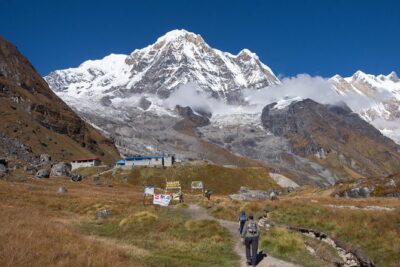
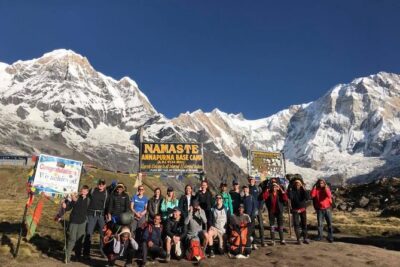
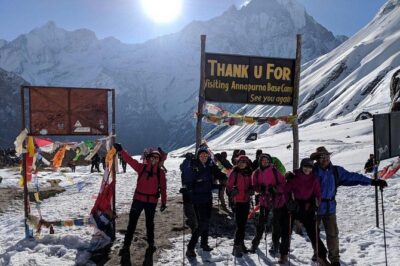
When you finally reach Annapurna Base Camp, you’re surrounded by massive peaks, and you’ll see how the approach funnels into this area through the gorge you just hiked. Overnight here means you’re spending the night in the thick of it, not just passing through.
Consideration: you’ll be at high altitude by then, so take your time on small tasks. Slow movements help. Hydrate.
The return down: downhill isn’t always easy on the knees
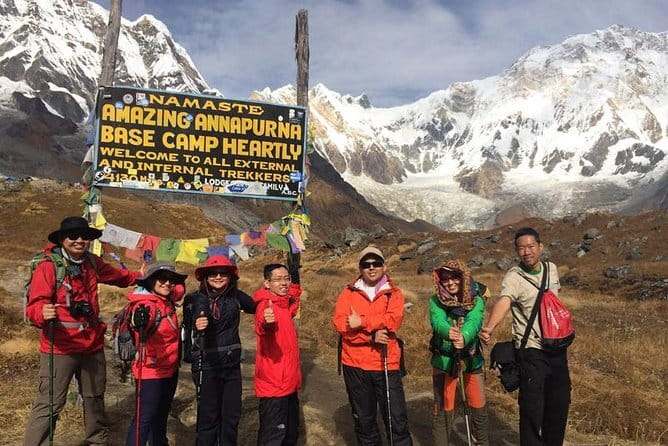
After Annapurna Base Camp, the trek turns downhill. You pass places like Machhapuchhre Base Camp, Deurali, Himalayan Hotel, and Doban before reaching Bamboo for the night. The itinerary calls this a downhill day, and yes, it’s less about climbing—but descending can still be tough on your joints.
The next day retraces steps toward Chhomrong. You’ll stop for lunch there, then continue down the Modi Khola valley. The stone steps at Chhomrong are again part of the challenge, and after that you descend to Jhinu Danda.
Jhinu Danda: a rest stop with a reward
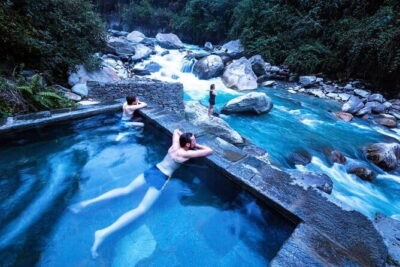
Jhinu Danda is where you get time to relax in the afternoon after reaching the village. Along the way you walk through rain forests and farms, which is a nice change from the higher, drier feel of Deurali and beyond.
Matque and Pokhara: your last hiking day turns into a full reset
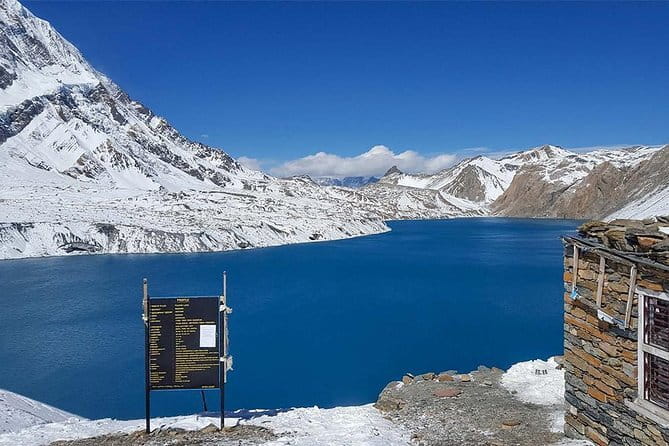
After breakfast, you leave Jhinu Danda and head into the final leg. The terrain shifts back into hill landscapes of western Nepal, and you’ll reach Matque. From there, you drive to Pokhara (about 2 hours), with lunch along the way.
Pokhara is your decompression city. Check in at the hotel and take it easy. In the afternoon, there’s a half-day sightseeing tour, and then you’ll have a welcome rhythm of normal meals and relaxed streets.
Flights back to Kathmandu and a farewell dinner
In the afternoon, you catch a flight from Pokhara to Kathmandu. For mountain views, sit on the left side of the plane. After you land, you check in again and have the remainder of the day for leisure, last-minute shopping, or landmarks you missed earlier.
The trip wraps with a farewell dinner, which is a nice moment to compare notes with your group. (And if your group includes a certain kind of photo person, you’ll get to hear all the sunrise stories again.)
Value check: what $860 really buys you, and what you should budget for
At $860, this trek price looks reasonable once you see what’s built in. You’re paying for far more than a guiding fee. Your package includes airport transfers in private vehicles, Kathmandu and Pokhara 3-star hotels with breakfast, teahouse lodging during the trek, and all meals (breakfast, lunch, dinner) while hiking.
You also get domestic flights (Kathmandu to Pokhara and back), a guided Kathmandu city tour by private vehicle, and a licensed trek leader team with porter support. Permits paperwork is included too, specifically ACAP and TIMS. On top of that, you receive a down jacket and sleeping bag for the trek (returned after), plus a trekking map and duffel bag that you keep.
What costs extra
You’ll need to budget for the Nepalese visa fee, plus personal expenses like phone use, laundry, showers, battery charging, and bottled or boiled water. Tips for guides and drivers/porters are not included.
Gear notes that matter
Because the down jacket and sleeping bag are provided, you can travel lighter. But you’ll still want your own daypack system and layers you’re comfortable in—especially since weather in the high-altitude days can change quickly.
Single rooms
If you want your own room, there’s a single supplement listed at USD 425. Single rooms aren’t as easy to find in higher elevations, so planning ahead matters.
A simple flexibility note
There’s free cancellation up to 24 hours before the experience start time, and the trip can shift dates due to weather. Trekking is weather-dependent. If you’re the type who needs strict control, build in mental wiggle room.
Who this Annapurna Sanctuary trek suits best
This is a strong fit if you want the Annapurna Base Camp destination without turning the trip into a fitness boot camp. You’ll still hike daily for 6–7 hours on steep, rough trails, but there are no extreme weather promises—just practical planning and a trek leader who can amend the route if safety requires it.
It also suits solo travelers who don’t want to organize logistics. Group size is capped at 12, and the leader team structure is designed to keep the hike running even if someone needs extra attention.
Who should think twice
If you have knee issues with long descents, the downhill return days may be a concern. If altitude makes you anxious, remember the trek goes as high as about 4,130m, and daily ascents can be 400–700m. You don’t need to be an elite athlete, but you do need to take training and pacing seriously.
Book it or skip it: my call based on how this trip is built
I’d book this trek if you want a guided, well-supported Annapurna experience where the big meals and overnight logistics are handled, and you’re excited to earn the sunrise views from Poon Hill and then go all the way to Annapurna Base Camp. The value jumps out when you consider meals, lodging, permits, domestic flights, and the guide team all sit inside the one price.
I’d hesitate if you want a totally low-effort hike, or if you know you won’t handle steep steps and long downhill walking. Also think carefully if you dislike early mornings—the Poon Hill day starts before comfort fully shows up.
If you do book, pick your travel dates with the season in mind. Autumn (Sept to Nov) and spring (March to May) are described as best for sunny, warm trekking and strong views.
FAQ
FAQ
Is the trek price only for guidance, or are flights and hotels included?
The $860 price includes private airport pickups and drops, Kathmandu and Pokhara hotel accommodation with breakfast, teahouse accommodation during the trek, and domestic flights (Kathmandu to Pokhara and back). It also includes meals during the trek and a guided Kathmandu city tour by private vehicle.
What meals are included during the trek?
All meals are provided during the trek, including breakfast, lunch, and dinner. In Kathmandu and Pokhara, only breakfast is included, while lunch and evening meals are not included in the package.
Are Annapurna Conservation Area (ACAP) and TIMS permits included?
Yes. The package includes all necessary paperwork and trekking permits, including ACAP and TIMS.
Do I need to bring a sleeping bag or down jacket?
You don’t need to buy them for the trek. The trip provides a down jacket and sleeping bag to use during the journey, and you return them after the trip completion.
How high do you hike, and how much do you walk each day?
You’re likely to walk about 6–7 hours each day on steep, hilly terrain. The moderate trails reach up to around 4,130m, and daily ascents can be roughly 400–700m on some days.
How big is the group, and how much porter support do you get?
The maximum group size is 12 travelers. There is an experienced trek leader and assistant leader, and the listed porter/guide support is 2 trekkers per porter and 4 trekkers per assistant guide.
Can I choose single-room accommodation?
Yes, single rooms are available on request with a single supplement of USD 425. Single rooms are not as easy to find in higher elevations, so you’ll want to plan for that.
On which side of the plane should I sit for views?
For the Kathmandu to Pokhara flight, sit on the right side. For the Pokhara to Kathmandu flight, sit on the left side.
More Trekking Out of Kathmandu






More Tour Reviews in Kathmandu




Just Reviewed in Kathmandu
- Mountain Bike Tour
★ 5.0 · 3 reviews - Annapurna Panaroma
★ 5.0 · 3 reviews - Mount Everest Scenic Flight 50 Minutes
★ 5.0 · 3 reviews - Kathmandu : Swambhunath & Durbar Square Guided Half Day Tour
★ 3.3 · 3 reviews - Chandragiri Cable Car & Monkey Temple Tour – Private/Group
★ 5.0 · 3 reviews - Kathmandu: Shivapuri National Park Hiking Day Trip
★ 3.3 · 3 reviews
Annapurna Base Camp Treks, compared.
 ★ 5.0Annapurna base camp trek 5 DaysFrom $699252 reviews
 ★ 5.014-Day Private Annapurna Base Camp TrekFrom $1,090180 reviews
 ★ 5.0Annapurna Base Camp TrekkingFrom $1,779116 reviews
 ★ 5.0Annapurna Base Camp TrekFrom $935111 reviews
★ 5.0Annapurna Base Camp TrekFrom $1,350107 reviews
 ★ 5.0Kathmandu to Annapurna Base Camp (ABC) 5-Day TrekFrom $99102 reviews
 ★ 5.0Annapurna Base Camp Trek- 11 DaysFrom $99990 reviews
 ★ 5.0Annapurna Base Camp Trek 12 DaysFrom $80085 reviews
Browse the lists this tour appears in