
Poon Hill does the mountain magic fast. This 6-day trek in Nepal’s Annapurna region mixes easy walking, big viewpoints, and cozy lodge nights, with the headline being the Poon Hill sunrise over Annapurna and Dhaulagiri. It’s a short itinerary, but it still gives you that feeling of being close enough to the peaks to stare for a long time.
I love two things most: the way the trek is run with strong on-the-ground organization by an English-speaking, licensed guide, and the comfort level at the tea houses. In particular, the dining rooms are described as having good heating, which matters when mornings are cool and evenings turn chilly.
One consideration: the trek is weather-dependent. Since a lot of the wow factor happens at dawn, you’ll want good weather to really see the sharpest mountain views.
In This Review
- Key highlights worth your attention
- Poon Hill in a nutshell: why this trek is such an easy win in Annapurna
- Day-by-day: Kathmandu, Pokhara lakes, and the Annapurna stairway circuit
- Poon Hill sunrise: how this route earns its reputation
- Ulleri, Ghorepani, and the rhododendron stair rhythm
- Deurali Pass (3090m) to Tadapani: the day with the altitude hit
- Ghandruk and Kyumi: finishing with village life and a bus ride
- Guides, permits, and the stress-reducing logistics you actually feel
- Lodges, meals, and provided gear: where the package saves you time
- Price and value: what $590 buys on this 6-day trek
- Who should book this Poon Hill trek (and who should slow down)
- Should you book this Poon Hill trek with Base Camp Adventure Pvt. Ltd.?
- FAQ
- What time does the trek start in Kathmandu?
- Where does the trek start and end?
- Is this a private tour or shared group?
- What kind of accommodation will I get during the trek?
- What meals are included?
- What trek gear is included, and what do I need to bring?
- Do I need travel insurance?
- What happens if weather is poor or the trek can’t run as planned?
Key highlights worth your attention
- Poon Hill sunrise timing focused for the Annapurna and Dhaulagiri panorama
- Rhododendron forest walking with stone steps and village-to-village scenery
- Comfort-forward lodges with heated dining areas to keep you warm
- Licensed English-speaking guides plus first-aid kits for peace of mind
- Gear support included like a down jacket and sleeping bag (with return)
- Owner flexibility noted through guide support when plans need adjusting
More trails out of Kathmandu, boots ready
- Everest Base Camp Trek – 14 Days★ 5.0 · 1,499 reviews
- Everest Base Camp Trek★ 5.0 · 842 reviews
- Everest Base Camp Trekking★ 5.0 · 485 reviews
- Nagarkot Sunrise View and Day Hiking from Kathmandu★ 5.0 · 471 reviews
Poon Hill in a nutshell: why this trek is such an easy win in Annapurna
This trek is famous for a reason: you get serious Himalayan views without committing to a long, punishing route. The route sits in the Annapurna region and is widely considered a good match for families and mixed ages, because the days are structured and the walking is manageable for most people who can handle uphill stairs.
You’ll also get a nice rhythm. Days aren’t just “walk, walk, walk.” You’ll start with drives that let you settle in, spend nights in villages like Ghorepani and Tadapani, and finish by dropping back toward Pokhara before returning to Kathmandu. That pacing helps you enjoy the views instead of just surviving the day.
And let’s be honest: the mountains are the main event. From Poon Hill, you’re looking for sweeping views of the Annapurna range and the Dhaulagiri massif, with other named peaks often visible in the mix. The itinerary also puts you in position to catch views around places like Ulleri and Tadapani, so even if one morning is cloudy, you still have other moments to chase good light.
Day-by-day: Kathmandu, Pokhara lakes, and the Annapurna stairway circuit
On Day 1, the trek starts with a surface transfer from Kathmandu to Pokhara. The drive includes green scenery and villages along the highway, then you land in Pokhara, often known for its lakeside atmosphere. This is a helpful day if you’re arriving from afar, because it gets you into the region without demanding hiking immediately.
Day 2 begins with a drive to Nayapul and then you’re into trekking. You cross a suspension bridge over Modi Khola, then climb up through steep stone stairs toward Ulleri. Ulleri is a key viewpoint stop, and you’ll get a view of peaks including Annapurna South and Hiunchuli, plus others depending on visibility.
Day 3 continues the “village walk” feel. Leaving Ulleri, you head through a rhododendron forest (the stone steps here help keep the footing more consistent). The route then moves through Banthanti and Nangge Thanti near the Bhurungdi Khola. You follow the river corridor for stretches, then reach Ghorepani, a Gurung village that becomes your base for the big sunrise.
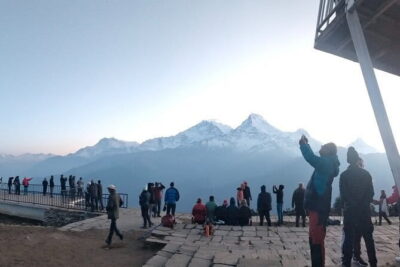
Day 4 is the early one. Before sunrise, you hike up to Poon Hill to catch the dawn glow on the mountains—often including Annapurna and Dhaulagiri massifs, Machhapuchhre (Fishtail), and Patal Hiunchuli. After the sunrise hike, you descend back to Ghorepani, then continue onward toward Tadapani via Deurali Pass (3090m). Tadapani is positioned for strong views too.
Day 5 starts in forest again and heads toward Ghandruk. You’ll walk through rhododendron scenery, then have lunch in Ghandruk. After lunch, you descend on stone staircases to Kyumi, then take a bus back to Pokhara. That’s a smart way to save energy while still keeping the trekking experience intact.
Day 6 wraps it up with a private van back to Kathmandu. You’re dropped at your hotel, and you can use that time for a relaxed stroll and a feel for the capital city.
Poon Hill sunrise: how this route earns its reputation
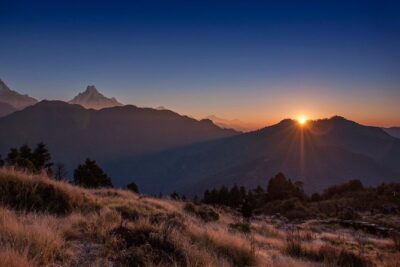
Poon Hill is the star stop, and the itinerary protects it by planning the hike early, before sunrise. The goal is simple: catch that moment when mountains shift from dark silhouettes into glowing layers. The views are described as a panoramic show of the Annapurna and Dhaulagiri region, with Machhapuchhre and Patal Hiunchuli mentioned among the peaks you may see depending on conditions.
What makes this sunrise plan work for real life is that you’re not guessing timing. You’re given a morning schedule designed around visibility. You’ll also be staying in Ghorepani, which reduces the pressure of having to rush from a far base.
Still, don’t treat sunrise like a guarantee. The trek requires good weather, and clouds can soften or hide the crispness of the peaks. This is where you’ll feel the value of having more than one viewpoint day. Ulleri and Tadapani both offer mountain views, so even if the first bright morning isn’t perfect, the trek doesn’t leave you with only one shot at the sky.
If you’re traveling with kids or older hikers, sunrise can sound hard on paper. In practice, it’s a short hike portion timed for the payoff. The bigger test tends to be the stairs and early start, not technical terrain.
Ulleri, Ghorepani, and the rhododendron stair rhythm
Ulleri is a day-two highlight because it combines a climb with payoff views. After crossing the Modi Khola suspension bridge, you’re on steep stone stairs. That’s the main “work” of the first trekking day, and it’s the kind of uphill that builds quickly, especially if you set too fast a pace. The reward is the sightline toward peaks like Annapurna South and Hiunchuli, and it helps you understand why people come all this way for this region.
Day 3 shifts the feel from viewpoint climbing into a calmer walking day. The rhododendron forest sections add variety, and the stone steps mean you’re not constantly fighting uneven ground. As you pass Banthanti and Nangge Thanti near Bhurungdi Khola, you get glimpses of village life along the route rather than only peak views.
Then comes Ghorepani. This village is where your body settles in for the sunrise mission. It also becomes a place to warm up between hikes, especially because the lodge dining setup is described as having good heating. That’s not a luxury detail when you’re hiking early; it helps your recovery after a cold morning climb.
Before you lock this one in, a few Kathmandu alternatives:
Deurali Pass (3090m) to Tadapani: the day with the altitude hit
Not every day is equal, and this one has more intensity. After sunrise on Day 4, you hike back to Ghorepani and then head toward Tadapani via Deurali Pass (3090m). A pass day tends to feel longer, and the elevation means you’ll want to take steady steps rather than sprinting uphill.
The upside is the scenery and the payoff views around Tadapani. The route notes strong outlooks toward Annapurna South and Machhapuchhre, plus surrounding valleys and peaks. Even when the sky isn’t perfect, the pass day usually gives you a stronger “mountain wall” feeling because you’re higher and closer to the drama of the ridges.
Tadapani is also a good place to transition your mind. By the time you reach it, you’ve already had sunrise at Poon Hill. That means you can shift from chasing light at dawn to enjoying views as the day unfolds.
Ghandruk and Kyumi: finishing with village life and a bus ride
Day 5 keeps things scenic and still manageable. You walk through rhododendron areas toward Ghandruk, then take lunch there. Ghandruk is the kind of village stop that adds human scale to the trek: instead of only “stairs and peaks,” you get more of the settled community rhythm and the sense of what life looks like in these valleys.
After lunch, you descend on stone staircases down to Kyumi. Then you take a bus back to Pokhara. This is one of those practical choices that makes the route work as a 6-day plan. You still get the trekking experience, but you’re not dragging your legs through a full extra day of hiking just to reach a town.
In the evening, you’re in Pokhara. That’s a nice reset, because you can eat, relax, and choose your pace before the final transfer back to Kathmandu on Day 6.
Guides, permits, and the stress-reducing logistics you actually feel
This trek is run with a local government licensed English-speaking guide, and that matters more than it sounds. When you’re up early, walking on stairs, and moving between multiple villages, you want someone who understands timing, route transitions, and basic safety routines.
The guide support is one of the most praised aspects in the feedback you shared. Names that show up include Shiva Prasad, Navaraji, and Prakash, with owner Shree described as helpful in Kathmandu and known for adjusting the itinerary when needed. That flexibility came up when someone got sick and needed changes in trekking pace and route support.
You also get first-aid medical kits included. That doesn’t mean you’ll need them, but it does mean the trip isn’t improvising. The tour also includes trek entry permits and fees, so you’re not worrying about paperwork while you’re thinking about sunrise and trail conditions.
One extra detail that’s often overlooked: this is a private tour/activity. That means it’s only your group, not a free-for-all with strangers. For families and older hikers, that can make a real difference in how smoothly pacing works.
Lodges, meals, and provided gear: where the package saves you time
Accommodation is in “best available” lodges and guesthouses during the trek, mainly in twin sharing. While these are simple mountain stays (you’re not in a hotel), you can expect the comfort level to be more modern than you might picture, with heated dining rooms specifically called out.
Meals are included with breakfast on 5 days, lunch on 4 days, and dinner on 3 days. That setup is practical because the days with trekking effort are also the days when meals matter most. You’ll still have gaps where you’ll buy drinks or snacks on your own, but the core food is handled.
Gear is partially provided, which is a big deal for value. You get a down jacket, sleeping bag, and a duffel/kit bag (with the expectation that you return those items after the trek). That reduces how much you have to carry onto the plane.
What’s not included is your personal trekking equipment, plus alcohol and drinks, and laundry. So if you’re bringing your own daypack, trekking poles (if you use them), trekking shoes, and a few personal layers, you’ll be set. If you’re hoping the tour provides everything from head to toe, you’ll need to plan for gaps.
Price and value: what $590 buys on this 6-day trek
At $590 per person, this trek is priced like a packaged mountain service rather than a bare-bones hike. You’re paying for:
- Accommodation during the trek (mainly twin sharing lodges/guesthouses)
- A licensed English-speaking guide
- Permits and fees
- Surface transfers from and back to Kathmandu
- Meals (breakfast/lunch/dinner amounts across the trek)
- Trek gear support like a down jacket and sleeping bag
- First-aid kits
The not-included items are clear too: travel insurance is compulsory, and you’ll cover alcohol, hot and cold drinks, laundry, tips, and personal equipment.
To me, the value is strongest if you want fewer moving parts. Permits, transfers, guide coordination, and lodge bookings are handled. That’s exactly what lets you focus on walking and the early morning view mission.
Who should book this Poon Hill trek (and who should slow down)
You’ll likely love this if you want big Annapurna-area views in a short timeframe. It’s also a strong fit for mixed groups—parents with kids, couples, and older trekkers—because it’s framed as an easy trek within the region where many age groups can complete it.
You might reconsider if you’re extremely sensitive to early starts. The day plan includes very early wake-ups for sunrise and multiple days of stairs, including steep stone stairs and repeated stair descents. The altitude pass is Deurali at 3090m, which adds effort even if the overall trek is considered approachable.
And you should be realistic about the weather. Since good weather is required, you’re not shopping for certainty of perfect visibility every morning.
Should you book this Poon Hill trek with Base Camp Adventure Pvt. Ltd.?
If you want a well-run, comfortable short trek with strong guide support, this is a solid choice. The recurring praise in the information you shared points to organization, safety awareness, and attentiveness, especially with families. The guide names (Shiva Prasad, Navaraji, Prakash) and the owner Shree’s flexibility suggest you won’t be treated like a number.
I’d book if you value warm lodge recovery, included permits, and guided logistics that help you avoid guesswork. I’d also book if you like the idea of a route with multiple viewpoint chances—so you’re not relying on only one magic moment.
I’d think twice if your schedule is strict and weather risk would cause major disappointment. And if you’re hoping you won’t need any personal trekking gear, double-check what you bring, since personal equipment isn’t included.
FAQ
What time does the trek start in Kathmandu?
The start time is 6:15 am at the meeting point in Kathmandu (44600, Nepal).
Where does the trek start and end?
The experience starts in Kathmandu and ends back at the same meeting point in Kathmandu. On the trek, you’ll also travel to and from Pokhara.
Is this a private tour or shared group?
It’s private, meaning only your group participates.
What kind of accommodation will I get during the trek?
You’ll stay in best available lodges and guesthouses during the trek, mainly in twin sharing.
What meals are included?
Breakfast is included for 5 days, lunch for 4 days, and dinner for 3 days.
What trek gear is included, and what do I need to bring?
Included gear is a down jacket, sleeping bag, and a duffel/kit bag (returned after the trek). Personal trekking equipment is not included.
Do I need travel insurance?
Yes. Travel insurance is compulsory, and it is not included in the price.
What happens if weather is poor or the trek can’t run as planned?
This experience requires good weather. If it’s canceled due to poor weather, you’ll be offered a different date or a full refund.
More 6-Day Experiences in Kathmandu
More Trekking Out of Kathmandu






More Tour Reviews in Kathmandu




Just Reviewed in Kathmandu
- Mountain Bike Tour
★ 5.0 · 3 reviews - Annapurna Panaroma
★ 5.0 · 3 reviews - Mount Everest Scenic Flight 50 Minutes
★ 5.0 · 3 reviews - Kathmandu : Swambhunath & Durbar Square Guided Half Day Tour
★ 3.3 · 3 reviews - Chandragiri Cable Car & Monkey Temple Tour – Private/Group
★ 5.0 · 3 reviews - Kathmandu: Shivapuri National Park Hiking Day Trip
★ 3.3 · 3 reviews
Poon Hill & Ghorepani Treks, compared.
 ★ 5.04 Days Poon Hill TrekFrom $40594 reviews
 ★ 5.0Ghorepani(Poonhill Trek)From $60081 reviews
 ★ 5.04-day Poon Hill TrekFrom $40074 reviews
 ★ 5.0Ghorepani Poon Hill TrekFrom $39961 reviews
★ 5.0Ghorepani Poon Hill TrekFrom $70046 reviews
 ★ 5.0Poon Hill TrekFrom $1,17242 reviews
 ★ 5.0Poonhill TrekFrom $60033 reviews
 ★ 5.0Poon Hill Trek packageFrom $40527 reviews
Browse the lists this tour appears in