
Review · MANASLU CIRCUIT TREKS
16 Day Private Manaslu Circuit Trekking
Few treks feel this quiet.
A 16-day private Manaslu Circuit Trek through Gorkha’s backcountry is for you if you want big Himalayan views without the nonstop crowds of Everest and Annapurna. I like the balance here: the route is wild enough to feel remote, yet it still stays mostly in teahouses, so you are not trying to haul tents and mountains of food. You’re also getting strong planning and safety structure through Ambition Himalaya Treks & Expeditions, with a guide, porters, permits, and medical evacuation arrangements. One drawback to consider: this is not a stroll. The itinerary includes the high, cold work of crossing Larkya La Pass, which takes real stamina and weather tolerance.
What I also like is the way the trip is staged so you are not just marching from day one. You get a Kathmandu setup day near Thamel, plus an acclimatization day in Samagaon with an optional hike toward Pung Yen Monastery (or an option to adjust the plan toward Manaslu Base Camp if you tell the team in advance). The possible catch is altitude and comfort can still affect how you feel, and the trek’s hard days are long enough that food and rest habits matter, even with good support.
In This Review
- Key things that make this Manaslu Circuit work
- Why Manaslu feels different from the usual Nepal trek
- Kathmandu: Thamel basecamp and a useful prep day
- Drive days that set the tone: rivers, villages, and first mountain glimpses
- The Gurung villages and teahouse rhythm you’ll actually feel
- Lho and Samagaon: when views become personal
- Acclimatization day in Samagaon: a smart pacing tool
- The run toward Larkya La: Samdo, glacier territory, and the mood change
- Crossing Larkya La: the cold, technical-feeling day
- Descent days that still feel scenic: Bhimtang to Tilje
- The final trekking loop: Thonje, Chyamje, and the Annapurna meet-up
- The return to Kathmandu: two drives and an easy landing back home
- Price and value: what $1,098 buys you here
- Service quality: guide and porter support you can count on
- Who this Manaslu Circuit is best for
- Should you book this Manaslu Circuit trek?
- FAQ
- FAQ
- What is the total duration of the Manaslu Circuit trek?
- Where does the trek start and end?
- Are airport transfers included?
- What permits are included?
- Is trekking done with teahouses or camping?
- What meals are included?
- Do you provide trekking gear like a sleeping bag and jacket?
- Can I change the acclimatization plan in Samagaon?
- What happens if I cancel?
Key things that make this Manaslu Circuit work
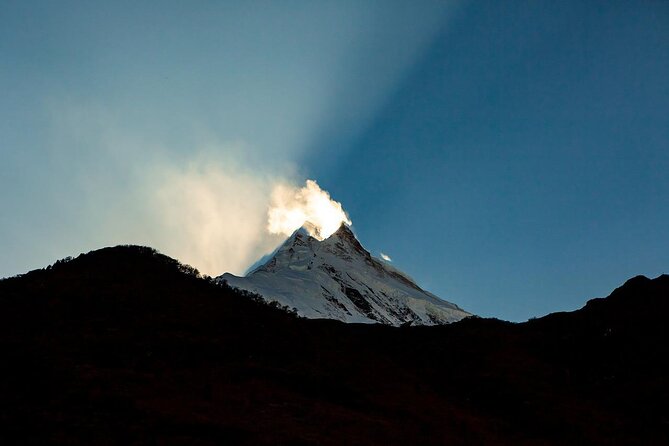
Crowd-avoidance in Gorkha District: Manaslu sees far fewer trekkers than the Everest/Annapurna mainlines.
Teahouse trekking without full camping: You sleep in lodges along the circuit instead of carrying a tent camp.
Acclimatization built in: A dedicated Samagaon day helps you manage the climb before the harder pass.
The big test is planned: Larkya La crossing is given an early start and a full day’s descent to Bhimtang.
Private group, shared porter model: You trek as only your group, with a porter shared between two paying people.
Safety and paperwork handled: Permits, guide/porter expenses, and worst-case rescue/evacuation are included.
Just your group, at your own pace
- Private Kathmandu Sightseeing Tour | UNESCO World Heritage sites★ 5.0 · 756 reviews
- Kathmandu: Full Day 7 UNESCO Tour with Lunch – Private/Group★ 5.0 · 415 reviews
- Private Bhaktapur and Nagarkot Day Tour From Kathmandu★ 5.0 · 305 reviews
- Kathmandu: Full Day Top 4 UNESCO Tour with Lunch – Private/Group★ 5.0 · 269 reviews
Why Manaslu feels different from the usual Nepal trek
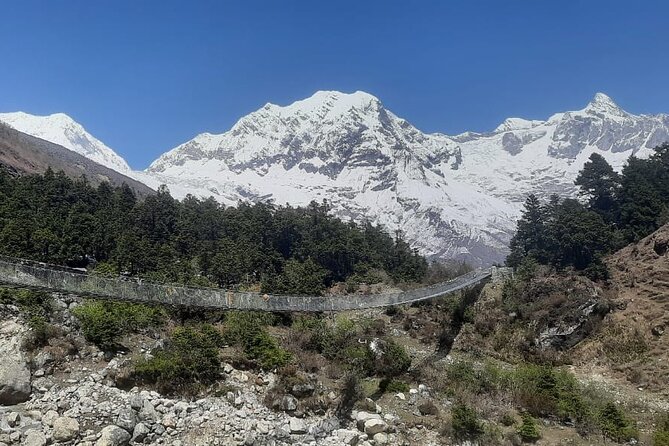
Manaslu Circuit is a great choice when you want the Himalaya vibe but with fewer interruptions. Manaslu sits inside Nepal’s Gorkha district, and it has stayed lower-traffic partly because it is tougher and has fewer facilities than the biggest trekking highways. That translates to a more human rhythm: fewer shops, fewer distractions, and more time looking at real terrain instead of waiting in lines.
Another reason this trek appeals to practical travelers is that it isn’t “survival trekking,” at least not in the way some remote routes are. The circuit uses teahouses for cozy lodging, which means you can focus on walking and acclimatization instead of running a camp. And because the trek is organized privately, you are not squeezed into someone else’s schedule.
Just go in with your eyes open: this route is demanding. The itinerary includes a long, hard day for the highest point on the trek (Larkya La Pass) and multiple shorter-to-medium walking days that still add up. If you have moderate physical fitness, you should be able to do it, but you’ll want to pace yourself.
Kathmandu: Thamel basecamp and a useful prep day
Your trek starts with an easy first night in Kathmandu. You land at Tribhuvan International Airport, then you get picked up and transferred to a comfortable hotel in Thamel, the area that’s convenient for gear checks and simple meals.
Day 2 is a free preparation day. That matters. A trek like this punishes rushed planning. This day gives you time to meet your trekking associates, go over the plan, and make sure you understand how your days will flow. If you want a quick cultural stretch, Kathmandu Durbar Square is close by and it’s a UNESCO World Heritage site with ancient temples.
This is also where the operator’s organization shows up in a practical way. You are not just dropped off. You get a planning check-in so the trek starts with fewer unknowns.
Drive days that set the tone: rivers, villages, and first mountain glimpses
Not every Himalayan trek starts with a big climb. Here, the early days ease you into the region with driving legs that follow river valleys.
On Day 3, you drive out of the Kathmandu valley toward Arughat, meeting the Budhi Gandaki River for the first time in the route’s narrative. The road tracks westward, and along the way you pass landscapes that start revealing Manaslu, Ganesh, and Himalchuli as you gain distance from the city. You then walk to Machha Khola as your first real trekking step (after the drive). Even though the walking portion is not described as extremely long here, it helps you settle into the trekking routine: boots on, pack set, steady pace.
Day 4 continues along the Budhi Gandaki corridor. You cross rivers, pass through places like Khorlabesi, and enjoy a teahouse break with hot Tibetan tea. There is also an optional Tatopani hot water spring stop ahead of Khorlabesi’s area, which can be a nice mental and physical reset if your legs are feeling stiff.
If you’re the type who likes your trek to feel like a journey through living places, these early river-valley days deliver. You get villages, forests getting denser, and constant hints of the mountains without pushing hard immediately.
The Gurung villages and teahouse rhythm you’ll actually feel
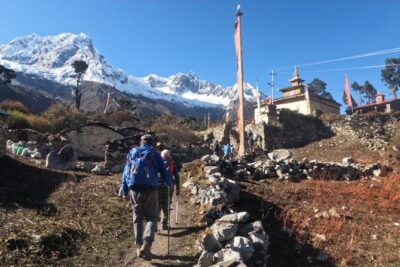
Once you’re on the trek proper, the Manaslu Circuit moves through a string of settlements that feel strongly tied to the Gurung presence. You’re seeing farmland terraces, pine and rhododendron forest, and smaller villages that do not look like they exist mainly for visitors.
Day 4 ends in Jagat, a beautiful village stop. Day 5 brings you to Salleri, then across a bridge to Philim, where your trekking permits are checked. That permit check is one of those moments that reminds you this is a regulated route, not a free-for-all trail.
From Philim, the path turns north. You walk past terraced fields of barley and millet, then through pine and rhododendron forest, plus waterfalls feeding into the Budhi Gandaki system. That mix of sounds and scenery makes the day feel full even when you are not at the highest altitudes yet. You finish at Deng, with nights in teahouses.
Day 6 continues the same valley rhythm: bridges, villages (Prok and Ghap), and broadening mountain views. You reach Namrung for the night, and the views start getting more serious, with peaks appearing more frequently in the frame.
This is a key point for value-minded travelers: teahouse-based trekking is part of what makes Manaslu realistic for many people. You still work for the views, but you aren’t forced into a camping logistics headache.
More trails out of Kathmandu, boots ready


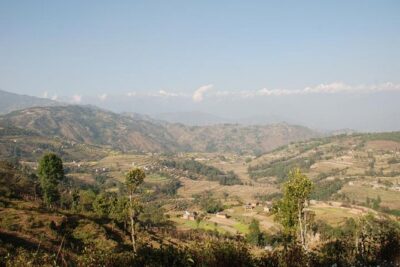
Lho and Samagaon: when views become personal
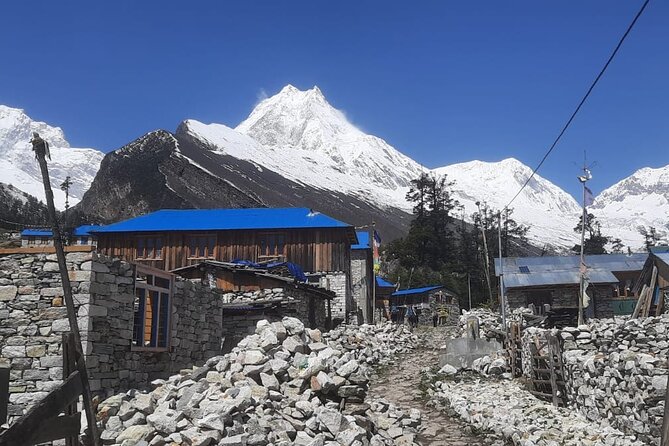
Days 7 and 8 shift into a more scenic, viewpoint-driven phase.
Day 7 includes a gentle ascent toward Lho Gham, then a move up to Lho Village. The day is described as about a 4–5 hour walk, and you’re walking through pine forest with small villages along the way. The big payoff is the view of Manaslu from Lho Village. There’s also a monastery you can visit and pray inside for a few minutes if you want a quiet cultural moment.
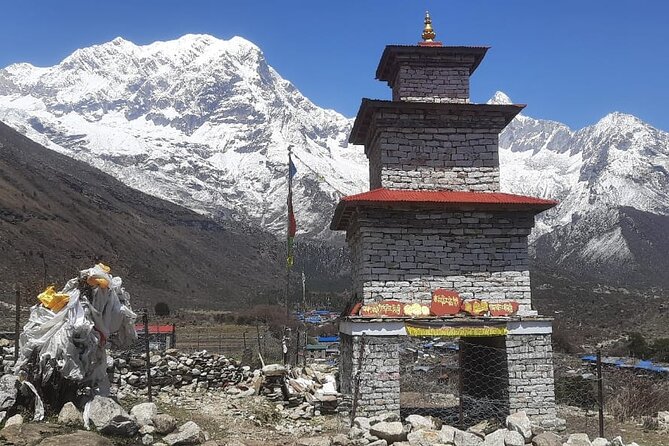
Day 8 takes you toward Samagaon, crossing villages like Sho and Sama. Sama is known for the Ribung monastery, and Shyala village brings dramatic outlooks of Himalchuli, Manaslu, Peak 29 (Ngadi) and glacier views. You finish at Samagaon, one of the larger villages in this region.
For many travelers, this is the part of the trip that feels like the story finally “clicks.” The trek is no longer just getting you into the area. It starts making you feel like you are living inside the mountain world.
Acclimatization day in Samagaon: a smart pacing tool
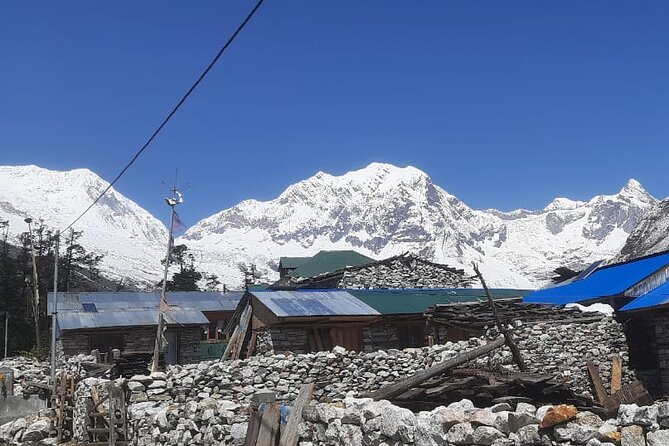
Day 9 is the acclimatization day, and it’s there for a reason. Samagaon is a large Buddhist community area with Gurung and Sherpa influence, and you can explore the village at a relaxed pace. You also have the option of hiking to Pung Yen Monastery.
You also have a built-in contingency: some people prefer to skip the acclimatization walk and trek toward Manaslu Base Camp, which takes about 5–6 hours. The operator asks that you tell them in advance so they can set aside time properly.
This is one of those practical differences between a well-run trek and a generic one. Giving you the option protects you if you work better with a change of plan. But it also keeps the team able to manage your schedule safely.
The run toward Larkya La: Samdo, glacier territory, and the mood change
Day 10 starts you into the far northern borders of the Manaslu region. The Budhi Gandaki keeps showing up, and you reach a diversion point with one road toward Manaslu Base Camp and another toward Larkya La Pass. You take the Larkya La direction.
The walk itself begins relatively easy, reaching areas like Kemro Kharka (yak grazing field). You pass birch, pine, and juniper forests, then move through Kani and on to Samdo, described as a village of Tibetan asylum seekers. If you want another cultural stop, there is an option to hike to Samdo Monastery.
Day 11 continues the slow shift into harder terrain. It starts after breakfast, takes you past Larkya Bazaar (a seasonal market), and brings you to areas with monasteries and stupas along the way. The day finishes at Dharamsala, positioned at the base of Larkya La Pass, often referred to here as Larkya La Phedi.
This is where the trek’s character changes. You’re not just walking “through” nature now. You’re walking closer to the glacial drama that defines the pass.
Crossing Larkya La: the cold, technical-feeling day
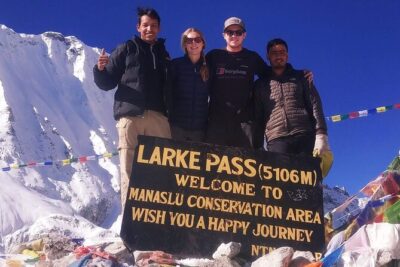
Day 12 is the big one. It’s described as the most challenging part of the trek because you cross Larkya La Pass, the highest altitude point on the itinerary.
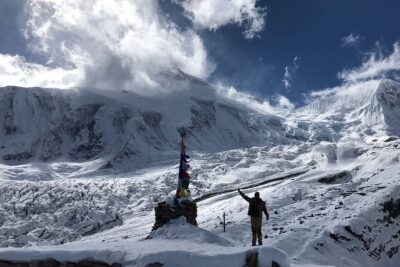
The day starts very early. You’re dealing with icy glacial moraines from the Larkya glacier, so this is not a day to be casual. The views from the pass area are described as stunning, with Manaslu, Himalchuli, Cheo Himal, Gyagi Kunja, Kang Koru, Ganesh Mountain, and Ratna Chuli all showing up.
After a few moments at the pass for photos, you descend toward Bhimtang for the night.
If you want to understand what you’re buying with this trek, it’s this day plus the way it’s planned. You have the early start, the explicit focus on glacial moraine navigation, and a full descent to reset by nightfall.
Descent days that still feel scenic: Bhimtang to Tilje
Day 13 is described as mostly downhill. You wake up to panoramic mountain views, then move toward Sangure Kharka. Rhododendron forests begin dominating as you lose altitude.
You reach Karche, then pass a small river flowing out of Dudh Pokhari. As you continue, the terrain gets more scenic with blooming flowers in the forest (as described). You reach Gho and continue on to Tilje, an attractive Gurung village for the night.
This is one of those days where trekking is still work, but it becomes more forgiving physically than the pass day. You get to appreciate the change in vegetation and the softer pace of a descent.
The final trekking loop: Thonje, Chyamje, and the Annapurna meet-up
Day 14 brings you nearer to the end. You move southeastwards through villages like Thonje. You also meet rivers in the lower belt, including Marsyangdi (with Dudh Khola flowing into it) as you approach the lower region of the trek.
A highlight on the itinerary is that at Dharapani, you can meet people who have taken the Annapurna Circuit route. That’s a real-world reminder that you are part of Nepal’s broader trekking web, even though Manaslu has been quieter.
You keep walking to Chyamje, described as a large settlement and a gateway to the upper reaches of Annapurna and Manaslu, and you rest here.
The return to Kathmandu: two drives and an easy landing back home
On Day 15, you start with a drive from Chamje to Besisahar. It’s described as bumpy, and you’ll see waterfalls and rivers with traditional villages along the road.
Then you take an easier, memorable drive from Besisahar back to Kathmandu. The route runs south up to Dumre, then turns east and follows the banks of the Marsyangdi and Trishuli rivers. You enter Kathmandu through the Nag Dhunga Pass. Overnight is in Kathmandu again.
Day 16 is straightforward: you finish the trek and can return home or extend your time in Nepal. The plan offers drop-off at the airport if you choose to fly out.
Price and value: what $1,098 buys you here
At $1,098 per person, this trek can look like a lot until you break down what’s actually included. You’re not only paying for walking days. You also get:
- All required permits (Manaslu, Annapurna, Special Immigration Permit, TIMS)
- A trekking guide and porter support (with shared porter model)
- Accommodation on the trek (teahouses) and breakfast in Kathmandu
- A safety net: worst-case rescue and medical evacuation arrangements
- Trek gear provided such as a down jacket, sleeping bag, duffel bag, trekking map, and a first aid kit
- Airport pickup and drop by private vehicle, plus local shared bus legs (jeep is optional at extra cost)
The value angle for me is risk reduction. When a provider handles permits, paper work, and medical evacuation planning, you’re spending money to reduce uncertainty. That matters most when the trek itself is remote and physically demanding.
The cost isn’t “cheap,” but it is structured. And that’s usually how you get a trek that runs smoothly instead of improvising on the trail.
Service quality: guide and porter support you can count on
The operator behind this trek is Ambition Himalaya Treks & Expeditions. In past trip reports, the owner Shishir is repeatedly described as attentive and professional, with an emphasis on honesty and hands-on planning. Guides named in those reports include Lok and Purna, and porters are described as supportive when altitude and food issues hit some trekkers.
For you, that matters because Manaslu can go sideways in the small ways: a rough appetite day, a headache, energy dips, stomach issues, colder evenings. A guide who can adjust pacing and help you keep moving safely is not a luxury.
This trek also provides a strong porter model: one porter shared between two paying people, plus the porter’s expenses and insurances. That takes pressure off your load and helps you move with less strain.
Who this Manaslu Circuit is best for
This is a strong fit if you want:
- a less crowded Manaslu Circuit Trek
- teahouse comfort rather than full camping
- a private group format (only your group participates)
- a trek with real structure: permits, guides, acclimatization, and pass planning
You might want to think twice if you’re looking for an easy holiday walk. The itinerary includes a long, hard day for Larkya La Pass, plus multi-hour trekking days that add up.
If you have moderate physical fitness and you respect the schedule, you’ll likely love the payoff: mountain views, village life, and the satisfying sense that you traveled somewhere that most people skip.
Should you book this Manaslu Circuit trek?
Yes, if you want a quieter Himalayan trek with solid support and a clear plan for the hardest day. The biggest reason I’d book it is the combination of teahouses + acclimatization + an operator that handles permits, logistics, and evacuation arrangements. That trio keeps you moving while still letting the journey feel authentic.
Book with extra caution if you know you struggle in cold conditions or with altitude discomfort. This is not a rigid problem-solver, but the structure is there to help you manage it.
FAQ
FAQ
What is the total duration of the Manaslu Circuit trek?
The itinerary is listed as 16 days (approx.).
Where does the trek start and end?
It starts at Tribhuvan Airport in Kathmandu, Nepal, and the experience ends back at the meeting point.
Are airport transfers included?
Yes. Airport pickup and drop services are included by private vehicle.
What permits are included?
The included permits are Manaslu, Annapurna, Special Immigration Permit, and TIMS.
Is trekking done with teahouses or camping?
The trek uses teahouses for accommodation, and the overview emphasizes that you do not need to carry tents and a lot of food like on fully remote camping routes.
What meals are included?
Meals and accommodation are included on the trek. In Kathmandu, accommodation is listed as with breakfast. Lunch and dinner in Kathmandu are not included.
Do you provide trekking gear like a sleeping bag and jacket?
Yes. The included gear list mentions a down jacket, sleeping bag, and duffel bag, along with a trekking map and a first aid kit.
Can I change the acclimatization plan in Samagaon?
Yes. There is an option to hike toward Manaslu Base Camp instead of the standard acclimatization approach, but you need to inform the team in advance so they can set aside another day for acclimatization if needed.
What happens if I cancel?
You can cancel up to 3 days in advance of the experience for a full refund. If you cancel less than 3 days before the start time, the amount paid will not be refunded.
More Trekking Out of Kathmandu






Private Days, Your Group Only


More Tour Reviews in Kathmandu



Just Reviewed in Kathmandu
- Mountain Bike Tour
★ 5.0 · 3 reviews - Annapurna Panaroma
★ 5.0 · 3 reviews - Mount Everest Scenic Flight 50 Minutes
★ 5.0 · 3 reviews - Kathmandu : Swambhunath & Durbar Square Guided Half Day Tour
★ 3.3 · 3 reviews - Chandragiri Cable Car & Monkey Temple Tour – Private/Group
★ 5.0 · 3 reviews - Kathmandu: Shivapuri National Park Hiking Day Trip
★ 3.3 · 3 reviews
Manaslu Circuit Treks, compared.
 ★ 5.0Manaslu Circuit TrekFrom $1,190292 reviews
Manaslu Circuit TrekFrom $1,081184 reviews
★ 5.0Manaslu Circuit Trek:From $1,099106 reviews
 ★ 5.0Manaslu Circuit Trek (15 Days)From $1,65750 reviews
Manaslu Circuit TrekkingFrom $1,49944 reviews
 ★ 5.016 Day Private Manaslu Circuit Trek from KathmanduFrom $1,13542 reviews
★ 5.0Manaslu Circuit TrekFrom $1,90035 reviews
 ★ 5.0Manaslu Circuit Trek 13 DaysFrom $1,40030 reviews
Browse the lists this tour appears in