
Review · NEPALI COOKING & MOMO CLASSES
Half Day Cooking Class in Thamel with Local Market Visit
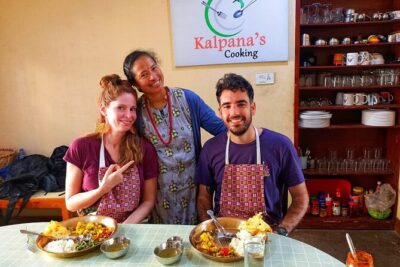
One of the best ways to understand Nepalese food is to shop first, then cook it. This Thamel class pairs a local market ingredient hunt with step-by-step cooking, and you eat each course while it’s still fresh and hot. I especially loved the hands-on pacing (cook, eat, move on) and the way the instructor makes spice control feel personal rather than stressful. The one drawback to keep in mind: on some class days the market stop may not feel as full as you expected, so if the market visit is a must, check with the school before you lock in your time.
You’ll also get English support and a small group setup, which matters because Nepalese cooking is all about technique and timing. It’s relaxed, interactive, and you’ll leave with a clearer sense of how ingredients and spices actually work together on the stove. Just plan your schedule around the short 3-hour window and choose a menu shift that matches your energy level.
In This Review
- Key highlights worth your attention
- Why Thamel’s 3-hour cooking format feels efficient
- The local market stop: ingredients, spices, and how Nepalese flavor builds
- Picking your menu in a small group (and why momos always matter)
- How the cooking lesson actually works: cook one course, eat it, repeat
- Spices, techniques, and masala tea break
- Price and value: what $21 really buys in Thamel
- Who this cooking class suits best (and who should think twice)
- What to bring and how to prepare in Kathmandu
- Should you book this Half Day Cooking Class in Thamel?
- FAQ
- How long is the cooking class?
- Do you cook multiple dishes or just one?
- Is there a local market visit included?
- How big is the group?
- Is the instruction available in English?
- What time options are available?
- Where does pickup happen?
- What’s included in the class?
- What should I bring?
- FAQ
- Is anything like alcohol included?
- Can I cancel if my plans change?
- Can I reserve and pay later?
Key highlights worth your attention
- Market-to-pan flow: you shop for ingredients and then cook them the same day.
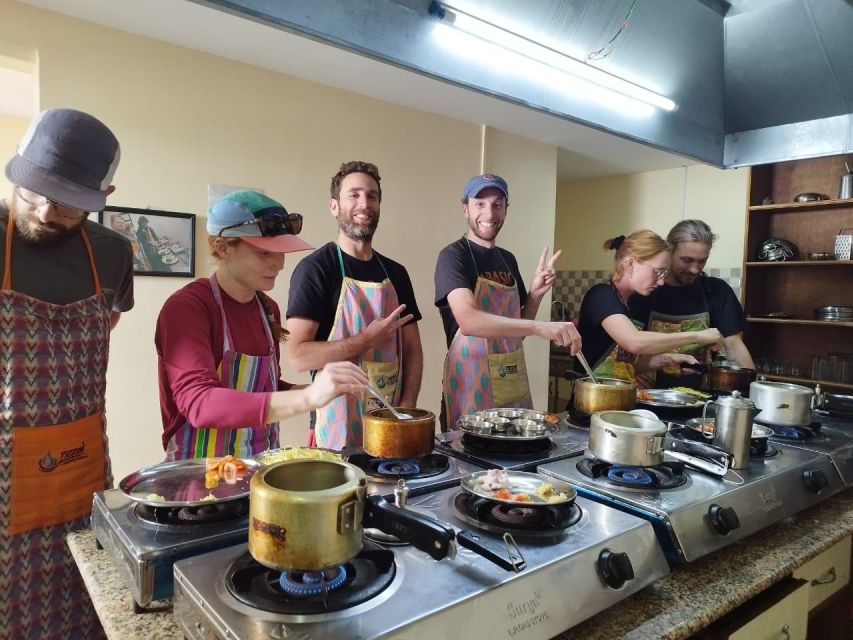
- Small group energy: limited to 8 participants, so you’re not stuck watching.
- Four courses, one after another: you cook a course and eat it right away.
- Momos included every time: whatever menu you pick, dumplings show up.
- Spice control is real: you can add more or less chili based on your taste.
- English instruction throughout: easier for questions, substitutions, and learning.
Before you lock this one in, a few Kathmandu alternatives:
- Kathmandu Secret Food Crawl & Local Market Tour★ 4.7 · 54 reviews
- Kathmandu Food & Drink and Shopping Rickshaw Tour★ 5.0 · 48 reviews
- Kathmandu Food Crawl & Market Tour★ 5.0 · 26 reviews
- Kathmandu: Food, Drink and Shopping Rickshaw Tour★ 4.9 · 15 reviews
Why Thamel’s 3-hour cooking format feels efficient
Thamel is the easiest place in Kathmandu to start something like this. You stay in the neighborhood, you meet up nearby, and you spend your time cooking instead of commuting. The class runs about 3 hours, with multiple daily shifts: 9:00 am, 1:30 pm, and 4:30 pm. If you’re doing sightseeing in the morning, the afternoon or evening shift can help you avoid the long day fatigue.
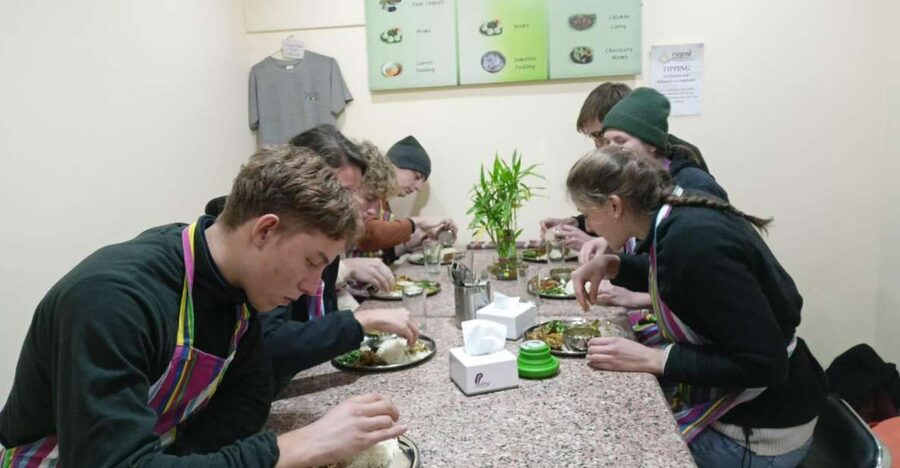
The structure also respects your attention span. You aren’t doing one long demonstration. You’re cooking, eating, and resetting each time. That alone makes the learning stick, because you taste immediately while the methods are still fresh in your head. You’ll also find it helps with appetite planning: the included meal is basically the point—come hungry, because you’ll be eating what you make.
Price helps too: at $21 per person, you’re paying for an English instructor, equipment, ingredients, a market visit, and a four-course meal. It’s not just a tasting. It’s cooking time, plus food you can actually enjoy instead of sample bites.
One practical note: pickup is inside Thamel by walking, and transportation isn’t included if you’re outside the area. If you’re staying in quieter neighborhoods, you’ll want to factor in how you’ll get yourself to Thamel for the start.
The local market stop: ingredients, spices, and how Nepalese flavor builds
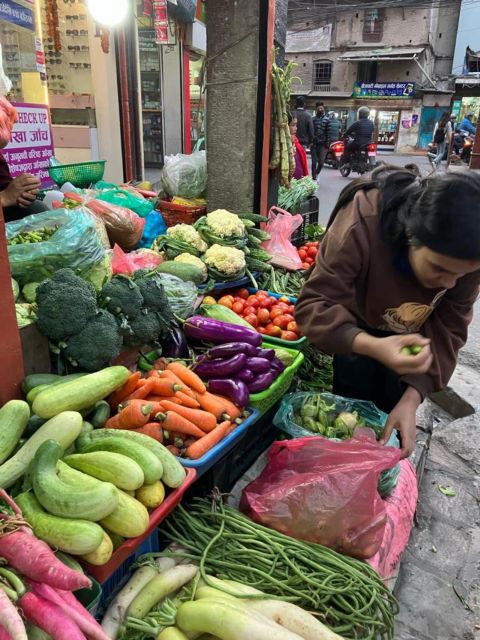
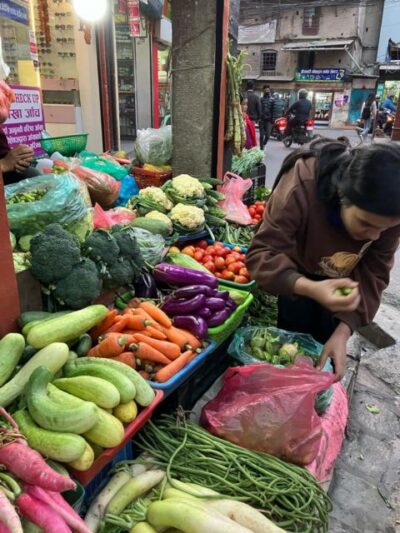
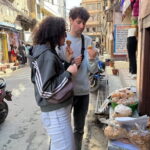
The most satisfying part of this class for me is the ingredient logic. A market visit isn’t a bonus here—it’s part of the lesson. You’ll go to a local market to pick up the fresh items you’ll use in your cooking class later. That gives you context for why certain dishes taste the way they do: aroma first, freshness second, and seasoning decisions last.
Nepalese cooking leans heavily on spices, and the class ties that learning to real ingredients you can see and handle. You’ll also get a sense of how vendors describe and sell spices, which helps when you’re trying to recreate flavors at home. Even if you only remember the big ideas, you’ll notice a difference the next time you cook something similar: you’ll understand which steps matter and why.
There’s one thing to be aware of based on real experience: one person’s class day didn’t include the food market as expected, and they linked it to timing (Saturday morning). The activity info says the market visit is included, but schedules can change. If the market stop is a top priority for your trip, message or ask the school ahead of time for confirmation on your exact day and shift.
Also, while the market itself is part of the included experience, you might see spices sold separately there at higher prices than you’d expect. That doesn’t affect the class meal, but it can influence whether you want to shop beyond what you need for cooking.
Picking your menu in a small group (and why momos always matter)
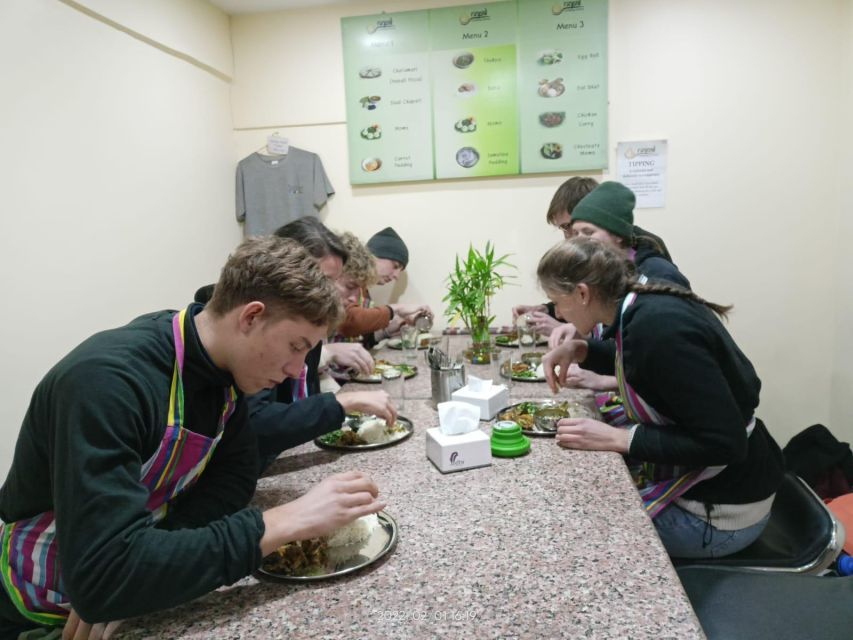
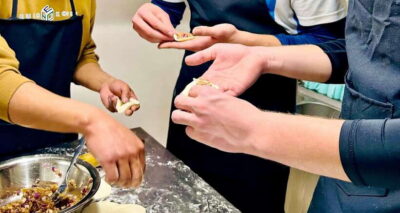
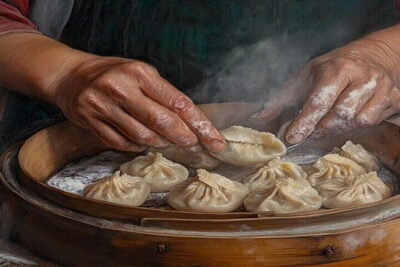
The school runs three different menus, and each menu includes four traditional dishes. You’ll rotate through cooking all four courses. The menus are designed with visitor favorites in mind—momos are included on every menu, so you won’t show up worried you’ll miss the dumpling moment.
What I like about this menu setup is that it reduces decision fatigue. In a short class, you want clarity. Instead of standing around wondering what’s happening next, you know you’re working through a complete set of dishes. And because your group is small (limited to 8), there’s room for the instructor to adapt as needed.
If you’re traveling solo, this is a good fit. One of the strongest themes from the experiences shared is the welcoming, family-like atmosphere and the feeling of being looked after from the first minute. The instructor guides the process in a way that feels patient rather than rushed.
Another detail worth noting: you may be able to swap or adjust individual dishes inside the chosen menu. That flexibility can be great if you have preferences or if you’re trying to avoid something that doesn’t fit your taste. Still, for dietary restrictions and allergies, you should tell the school ahead of time so they can accommodate or suggest alternatives.
How the cooking lesson actually works: cook one course, eat it, repeat
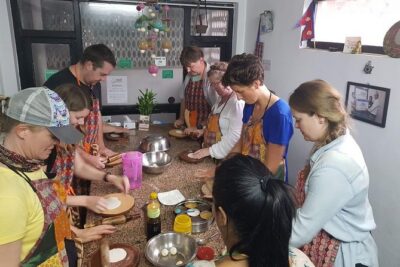
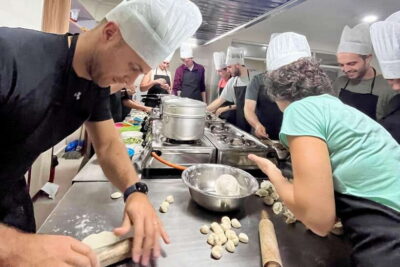
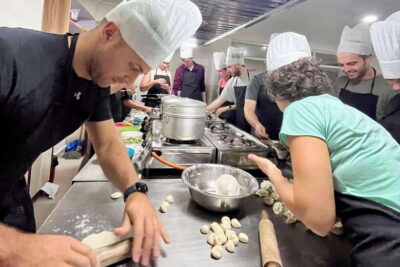
This class is built around a simple rhythm: the chef takes you step-by-step through the process, you cook one course, and then you eat it. Then you move on to the next course. That means you’re not waiting for everything to finish before tasting. You’ll get several chances to judge what you’re making in real time.
It also lets you control the heat. Nepalese dishes can be chili-forward, but the class makes spice customization part of the activity. You can add more or less chili ingredient by ingredient. If you like heat, you can push it. If you don’t, you can go lighter. The key is that you aren’t stuck with one default seasoning.
Because you cook each dish yourself, you’ll learn technique in a practical way. Instead of being told to memorize steps, you repeat them: prep, seasoning, cooking, and adjusting along the way. That’s how skills transfer. If you cook rice or sauce bases in a hands-on way, you start understanding how consistency and aroma change as heat and seasoning develop.
You’ll also taste a variety of dishes during the class. That matters because Nepalese and Newari foods aren’t just about one flavor profile. You’ll experience different textures and spice balances across multiple courses, rather than repeating the same dish flavor four times.
And yes, you’ll be eating a lot. The class encourages you to come hungry, and the included meal is a full outcome, not a side snack.
Before you lock this one in, a few Kathmandu alternatives:
Spices, techniques, and masala tea break
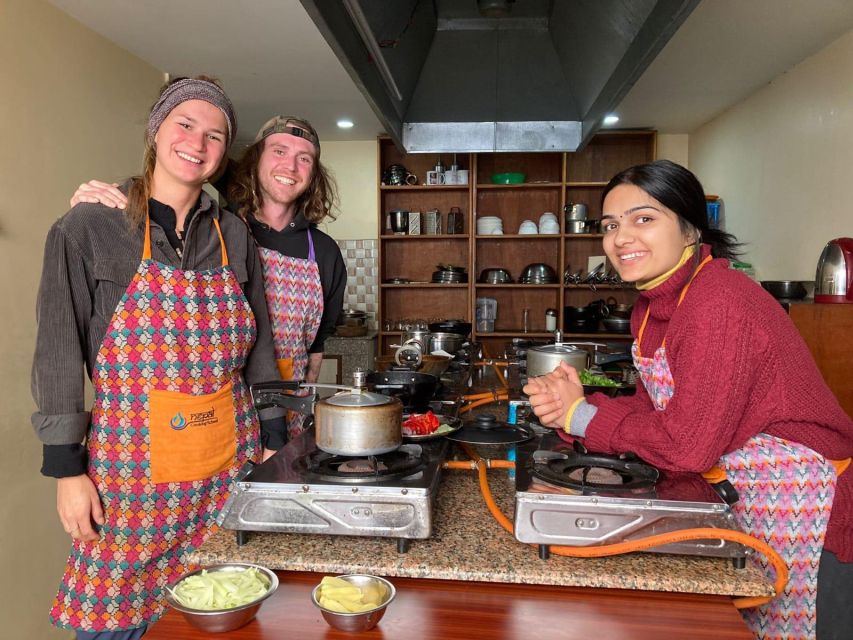
Spices are the backbone of this experience. You’ll learn about Nepalese food through ingredient use and cooking technique, not just by reading a recipe card. The market visit sets up the spice story, and the cooking session tests your understanding with real decisions—how much to use, when to add, and how to balance heat with other flavors.
One shared detail that stuck with me: some of the cooks come from a family that grows their own spices. Even if you don’t focus on where every single spice originates, the attitude you’ll see is practical: they treat spices like ingredients that need respect, not like mystery powders.
At some point during the class, you’ll also have masala tea. It’s included, and it’s a nice reset between courses. Tea doesn’t just taste good in Kathmandu’s air; it gives you a clean palate so you can judge the next dish more clearly.
Drinking water is included as well, which helps because you’ll be moving around, tasting, and cooking. A little hydration makes the spice lessons more comfortable.
Price and value: what $21 really buys in Thamel
At $21 per person for about 3 hours, the value is mostly in what’s included. You’re not paying extra for ingredients, equipment, or the instructor’s time. You also get:
- a local market visit
- an English-speaking cooking instructor
- four courses you cook and taste
- masala tea and drinking water
If you compare that to the cost of a simple meal plus a cooking workshop where ingredients are extra, this feels like the class is built to be self-contained. You leave with food, learning, and context—without needing to pay for transport into a separate cooking district.
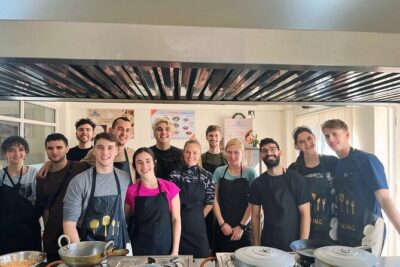
The small group limit (up to 8) also affects value. You get more hands-on direction and fewer people competing for help. That’s important in cooking classes, where a small tweak can change a whole dish.
Just don’t expect private transportation. Pickup is only described inside Thamel by walking. If you’ll need a car or driver from outside the neighborhood, plan for that separately.
Who this cooking class suits best (and who should think twice)
I think this experience is ideal if you want a practical Kathmandu activity that’s not just watching. If you like food, enjoy learning through doing, and want a real sense of Nepalese flavor building, this class hits the sweet spot.
It’s especially good for:
- solo travelers who want company but still get personal instruction
- couples or friends who want a shared activity and a meal outcome
- travelers who want hands-on spice control rather than a fixed tasting menu
It may be less ideal if:
- your schedule is too tight to return to Thamel in time (the class is 3 hours and starts at fixed shifts)
- the market visit is the entire reason you booked (ask ahead because one class-day experience suggests it may not always run as expected)
- you’re expecting to buy lots of spices at bargain prices (one experience noted market spices can be expensive)
Also, if you have allergies or dietary restrictions, don’t wait until you arrive. The class info explicitly encourages you to inform the school about restrictions so they can suggest alternatives or accommodate.
What to bring and how to prepare in Kathmandu
This is one of the easiest activities to pack for. The basic suggestion is to bring a camera. If you’re the type who likes to document food preparation, you’ll want it for the market ingredients and the cooking station setup.
Before you go, I’d do two quick prep tasks:
- Decide how spicy you usually like food. You can control chili while cooking, so give yourself a simple target.
- If you have dietary restrictions or allergies, tell the instructor in advance. That helps them plan ingredients for your four-course menu.
Finally, come with a mindset of learning through repetition. Cooking classes work best when you relax, follow instructions, and let your taste buds guide minor adjustments.
Should you book this Half Day Cooking Class in Thamel?
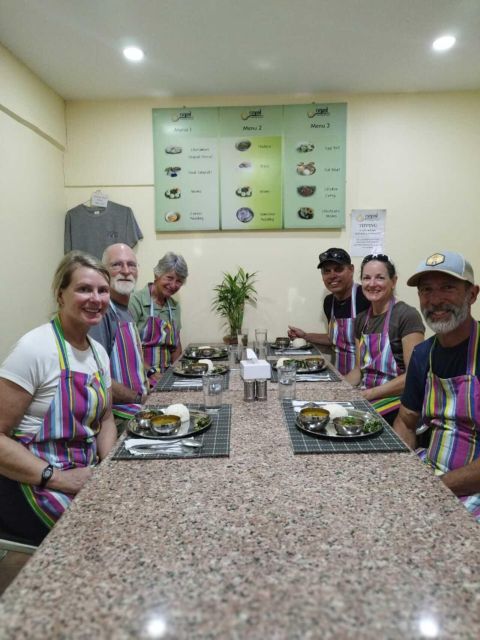
I’d book it if you want a short Kathmandu experience with real payoff: market context, step-by-step instruction, and a full meal made by you. The small group size and the cook-then-eat structure make it feel more like a fun, guided food session than a rushed tourist workshop. At $21 for a 3-hour class with four courses, it’s strong value if you’re staying in or near Thamel.
Skip or at least confirm details first if the market visit is your #1 goal, because there can be day-to-day differences. Also, if you’re staying outside Thamel, make sure you have a plan for reaching the pickup area by walking.
If you like food that’s built from spices and technique, this is the kind of class you can actually remember long after you leave the stove.
FAQ
How long is the cooking class?
The class lasts about 3 hours.
Do you cook multiple dishes or just one?
You cook four courses and you taste what you make.
Is there a local market visit included?
Yes, a local market visit is included as part of the experience.
How big is the group?
The group is small, limited to 8 participants.
Is the instruction available in English?
Yes. The instructor is English-speaking.
What time options are available?
There are three shifts: 9:00 am, 1:30 pm, and 4:30 pm.
Where does pickup happen?
Pickup is inside Thamel by walking. Pick up outside Thamel isn’t included.
What’s included in the class?
It includes the cooking class, equipment and ingredients, the local market visit, an English-speaking instructor, pickup inside Thamel by walking, masala tea, drinking water, and tasting your own creations.
What should I bring?
Bring a camera. Also consider sharing any dietary restrictions or allergies with the school before the class.
FAQ
Is anything like alcohol included?
No. Alcoholic beverages are not included.
Can I cancel if my plans change?
Yes. Free cancellation is available up to 24 hours in advance for a full refund.
Can I reserve and pay later?
Yes. The option is described as reserve now & pay later.
More Markets in Kathmandu

More Shopping Tours in Kathmandu
More Tour Reviews in Kathmandu






Just Reviewed in Kathmandu
- Mountain Bike Tour
★ 5.0 · 3 reviews - Annapurna Panaroma
★ 5.0 · 3 reviews - Mount Everest Scenic Flight 50 Minutes
★ 5.0 · 3 reviews - Kathmandu : Swambhunath & Durbar Square Guided Half Day Tour
★ 3.3 · 3 reviews - Chandragiri Cable Car & Monkey Temple Tour – Private/Group
★ 5.0 · 3 reviews - Kathmandu: Shivapuri National Park Hiking Day Trip
★ 3.3 · 3 reviews
Nepali Cooking & Momo Classes, compared.
 ★ 5.0Half day cooking class in Thamel kathmanduFrom $28607 reviews
 ★ 4.9Local Women-Led Nepali Cooking & Momo ClassFrom $4360 reviews
 ★ 5.0Local Lead Nepali Cooking & Momo-Making ClassFrom $5212 reviews
Local Women Lead Nepali Cooking ClassFrom $30125 reviews
 ★ 5.0The best Private Nepali Cooking Class in KathmanduFrom $2483 reviews
 ★ 4.8Traditional Momo Making Class & PickupFrom $460 reviews
 ★ 5.0Traditional Nepali Momo Making ClassesFrom $1853 reviews
 ★ 4.9Local Women-Lead Nepali Cooking & Momo ClassFrom $545 reviews
Browse the lists this tour appears in