
Review · MANASLU CIRCUIT TREKS
Private 12-Day Manaslu Circuit Trekking in Kathmandu
Larkya La makes this trek feel real. I love how the route mixes Gurung community culture with Tibetan-style stone villages, and I love that you’re promised big mountain panoramas across the Manaslu, Annapurna, and Ganesh Himal ranges. The private format also matters: you trek with your own small team and support staff, so the days feel more personal than a high-volume tour.
One thing to consider: this is a high-altitude circuit with a serious pass day. You’ll be dealing with long trekking days, big altitude changes, and weather risk around the crossing (the pass is referenced around 5106m/5160m in your program notes), so you’ll want solid fitness and a flexible mindset.
In This Review
- Quick hits before you go
- Why this Manaslu Circuit route feels more local
- Price and what $960 includes (and what it doesn’t)
- The Kathmandu-to-trail start: a full day of road time before you hike
- Machhakhola to Jagat: Sal forests and Tatopani hot springs
- Jagat to Deng: forests, rivers, and villages that feel lived-in
- Deng to Namrung: a suspension-bridge day with a landslide warning
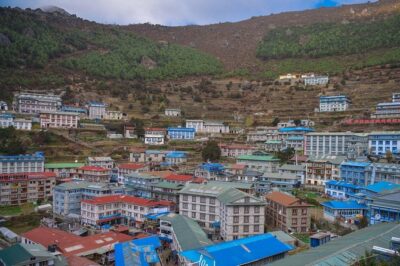
- Namrung to Lho: Mani walls, stone houses, and the shift into Tibetan culture
- Lho to Sama Gaon: rhododendron and pine forests, then altitude catching up
- Sama Gaon rest day: Pung Gyan Gompa and real village time
- Sama Gaon to Samdo: pine giving way to barren terrain
- Samdo to Dharmashala: rocky trail and ridge views
- The Larkya La Pass day (5106m/5160m): hard work, huge rewards
- Bimthang to Dharapani, then back to Kathmandu via Besisahar
- The practical side: fitness, altitude pacing, and support you can rely on
- Should you book this Manaslu Circuit trek?
- FAQ
- How much does the private Manaslu Circuit trek cost?
- How long is the trek?
- Where does the experience start and when?
- Is this a private tour?
- What permits and fees are included?
- Are guide and porters included?
- What altitude landmark does the trek cross?
- What is included for meals?
- What’s not included in the price?
- What happens if I need to cancel or if weather is bad?
Quick hits before you go
- Gurung + Tibetan-influenced villages: you move from forested lower valleys into Mani walls and gompa culture
- Tatopani hot springs stop: a practical break day on the Budhi Gandaki route
- Larkya La Pass crossing: a full-on high point with dramatic views
- Pung Gyan (Pung Gyen) Gompa side hike: a spiritual stop from Sama Gaon
- Guides and porters with oxygen meter + water purification: the support is built into the package
- Private group trekking: just your group, with one professional guide and porter coverage
Just your group, at your own pace
- Private Kathmandu Sightseeing Tour | UNESCO World Heritage sites★ 5.0 · 756 reviews
- Kathmandu: Full Day 7 UNESCO Tour with Lunch – Private/Group★ 5.0 · 415 reviews
- Private Bhaktapur and Nagarkot Day Tour From Kathmandu★ 5.0 · 305 reviews
- Kathmandu: Full Day Top 4 UNESCO Tour with Lunch – Private/Group★ 5.0 · 269 reviews
Why this Manaslu Circuit route feels more local
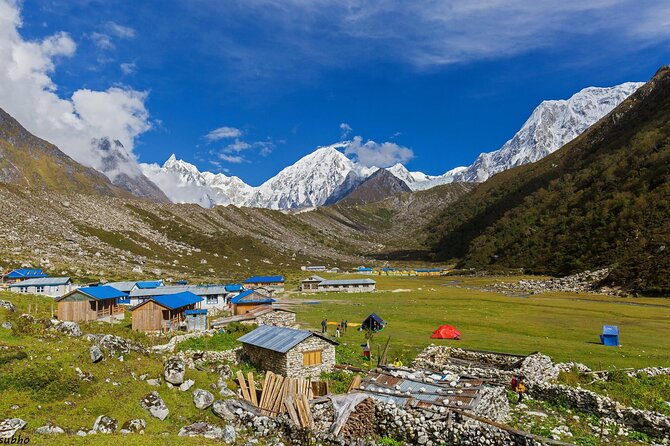
The Manaslu Circuit is often marketed for its views, but what keeps this trek interesting is how quickly the culture changes as you gain altitude. Your trek begins in classic lower-valley Nepal, then gradually shifts into areas described as Tibetan-cultured. That means you don’t just get scenery; you also get the feel of different ways of living—stone houses, Mani walls, and the gompa experience at Pung Gyan Gompa near Sama Gaon.
You’ll also be walking through villages tied to specific ethnic groups along the way, including Magar villages during the Namrung approach and Gurung community areas earlier in the circuit. The practical takeaway: you’re not stuck in “only trekking teahouse mode.” You pass through real settlements where daily life continues, and you get chances to hike into viewpoints and religious sites rather than only moving from one bed to the next.
Price and what $960 includes (and what it doesn’t)
At $960 per person for about 12 days, the value is less about luxury and more about logistics plus permits. Your package lists:
- Lodge/hotel accommodation in Kathmandu and during the trek (though there’s a contradiction in the provided info: Kathmandu accommodation is also listed as not included, so confirm this before booking)
- Permits and fees: MCAP, ACAP, Local Entry fee, and a Manaslu Special permit
- One professional guide and required porters, including their expenses
- Overland transport for the circuit stages
- Trek essentials: trek map, oxygen meter, duffle bags, first aid, and water purification
- Public liability insurance and assistance for emergency rescue evacuation
- Meals: breakfast (12), dinner (11), lunch (12)
What’s not included is also important for budgeting:
- Travel insurance
- Tips for guide/porters
- Hot water/hot shower and drinks like tea/coffee, plus alcoholic drinks
- Hotel accommodation in Kathmandu is listed as not included in one place—so do your homework and ask for the exact Kathmandu night plan
For me, the sweet spot here is the combination of permits + guide/porter coverage + altitude support tools (oxygen meter) + water purification. On a remote route like Manaslu, those details save time and reduce stress, especially on the pass day.
The Kathmandu-to-trail start: a full day of road time before you hike
Your journey kicks off in Kathmandu with a scheduled 7:15 am start and pickup offered. You’ll travel by black-topped roads along the Prithvi Highway out of the Kathmandu valley, then switch into more rugged, uphill/downhill driving. Day 1 is long—about 10 hours of overland travel—with a stop-and-see type rhythm: villages, river sections, terraced farms, and first broad glimpses of Manaslu and Ganesh.
You’ll reach Machhakhola for the night. The travel day is not “wasted time.” It sets your altitude pacing because you’re already moving into the lower trekking zone before your first hike. Just plan for the reality that this is a lot of sitting—bring something for comfort and expect dust and bumps, even if the main roads are smoother.
Machhakhola to Jagat: Sal forests and Tatopani hot springs
Day 2 shifts from road to trail with a trek toward Jagat. You’ll walk along the Budhi Gandaki River bank, climb through dense Sal forest, and then reach Tatopani—known for natural hot water springs.
That hot springs stop is one of the more practical “value moments” on the trek. Even if you keep it short, it helps break up the day and gives your body a different kind of recovery than just reaching a lodge. After that, you continue along the Budhi Gandaki again to Jagat for the night.
Day 2 is described as about 7 hours. It’s a good kind of first real trekking day: enough work to wake up your legs, without jumping straight into the toughest terrain.
More trails out of Kathmandu, boots ready
Jagat to Deng: forests, rivers, and villages that feel lived-in
Day 3 starts after permits are approved, then you trek toward Deng. The route follows the Budhi Gandaki again through dense tropical forest. Your notes also point out that these forest sections can shelter rare wildlife—another reason I like this itinerary phase. You’re not only chasing views; you’re moving through a living ecosystem.
Along the way, you pass through villages such as Bhatti Khola and Philim, then cross bamboo forest sections over the Budhi Gandaki River to reach Deng.
Day 3 is about 8 hours. This is where the circuit begins to feel “real Nepal trekking” instead of a scenic walk: it’s steady, it’s in the forest-and-river corridor, and it gives you your first taste of how the Manaslu region changes with elevation.
Deng to Namrung: a suspension-bridge day with a landslide warning
Day 4 includes a suspension bridge crossing and uneven trail sections. After that, you continue to Bihi Phedi and onward to Ghap, but there’s an explicit caution in your route notes: the trail from Ghap is prone to dry landslides.
Then you move past Magar villages to reach Namrung for the night. Namrung is one of those stops that starts to connect the dots between lush lower trekking and the more rugged, high-altitude rhythm ahead.
This day is about 5 hours, which sounds easy on paper. But with suspension bridges, uneven walking, and a landslide-prone zone, it’s a “slow down and pay attention” day rather than a sit-back day.
Namrung to Lho: Mani walls, stone houses, and the shift into Tibetan culture
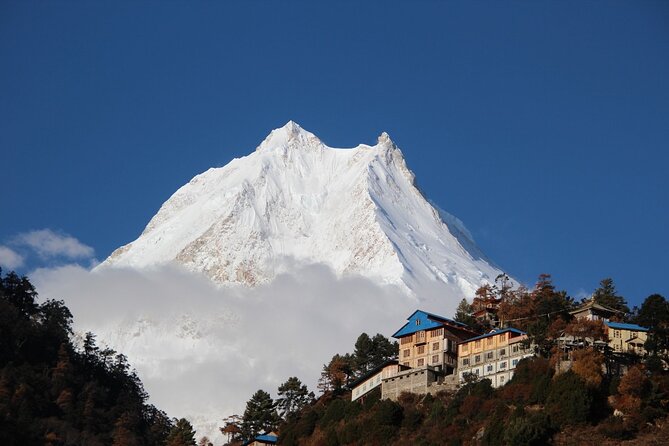
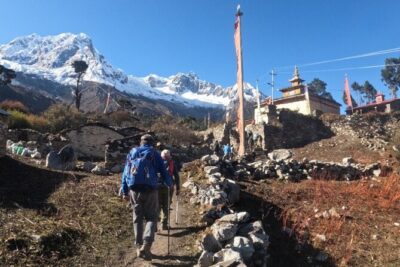
On Day 5, you gain altitude and the vegetation and culture change. You’re trekking into areas described as Tibetan-cultured. You pass Mani walls and stone houses, and the mountain views start becoming constant rather than occasional.
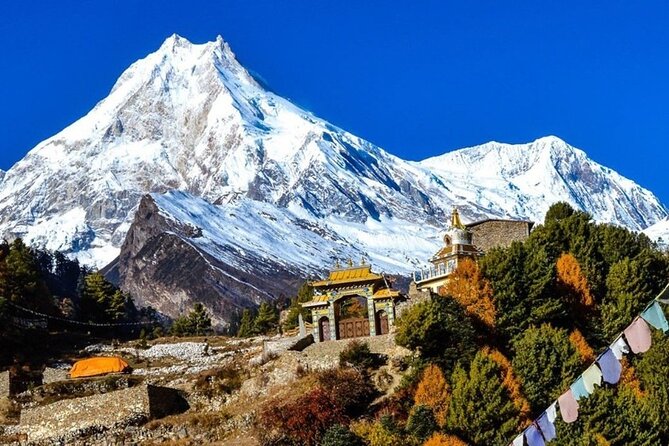
After about 4 hours you reach Lho. Your notes specifically call out Mount Manaslu (8163m) as visible from this section. Even if your view changes due to weather, the big idea is consistent: Lho sits right where the circuit starts to frame Manaslu as the main character.
Day 5 also includes “slow cultural altitude.” That means you’re not only going uphill—you’re entering a different architectural and spiritual style.
Lho to Sama Gaon: rhododendron and pine forests, then altitude catching up
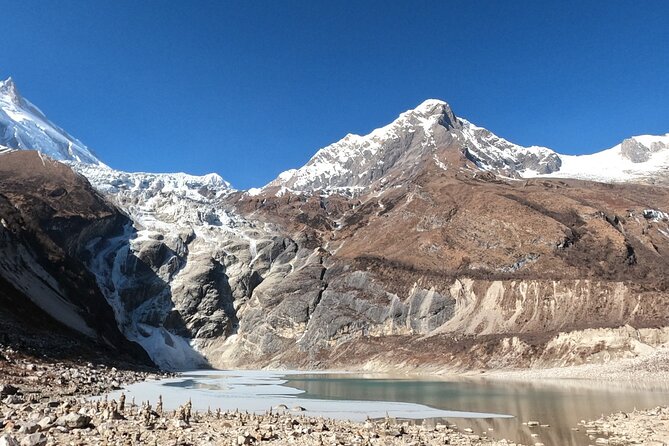
Day 6 is about 5 hours trekking from Lho to Sama Gaon. You’ll walk through pine and rhododendron forests, and your Manaslu views keep coming.
This day’s main value for me is the buildup to the pass. Sama Gaon is a point where the air feels thinner and where you want your body to start adapting. The route description labels this trek as challenging because you’re gaining altitude.
You stay overnight in Sama Gaon.
Sama Gaon rest day: Pung Gyan Gompa and real village time
Day 7 is a rest day in Sama Gaon. That matters. The program is blunt about why: altitude can get dangerous if you don’t take proper rest. So you’re given the time to acclimatize before the higher, barer sections of the circuit.
You’ll explore Sama Gaon and interact with villagers, then hike to Pung Gyan Gompa for views of Manaslu and surrounding mountains. Evening time is built in for local food and conversation.
If you’re the type who hates “wasted time” on treks, this is where rest pays you back. A rest day here helps you handle the colder, more exposed trail days later.
Sama Gaon to Samdo: pine giving way to barren terrain
Day 8 is described as 4 hours to Samdo. The vegetation becomes sparser and then disappears, leaving barren, higher terrain. The route moves through a remote section along the banks of the reduced Budhi Gandaki River.
This is a day where the emotional feel changes: less forest cover means more wind exposure and more direct connection to the mountain. Your Manaslu view stays with you, which is exactly what you want before the big pass.
Overnight in Samdo.
Samdo to Dharmashala: rocky trail and ridge views
Day 9 continues with 5 hours trekking toward Dharmashala. You’ll cross a suspension bridge again and keep moving over uneven, rocky ground. The notes mention views of Naike and Pangbuche peaks, plus Himal Chuli range along the way to Dharmashala.
Dharmashala is an important stop because it sets you up for the pass push. It’s also a good place to pay attention to how cold feels at night and how quickly you recover from each hike.
The Larkya La Pass day (5106m/5160m): hard work, huge rewards
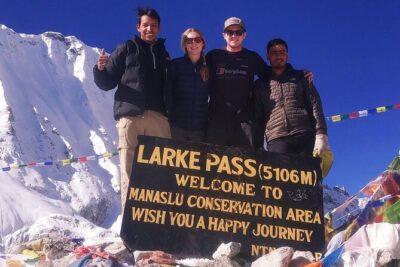
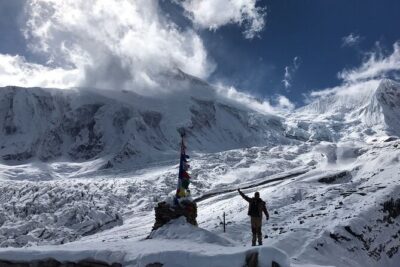
Day 10 is the highlight and the stress test. You trek through barren, remote terrain to reach Larkya La Pass across rough and snowy trail. Your notes list the pass as 5106m in the overview and 5160m in the day-by-day description, which tells you the altitude varies by source detail—but either way, it’s high and serious.
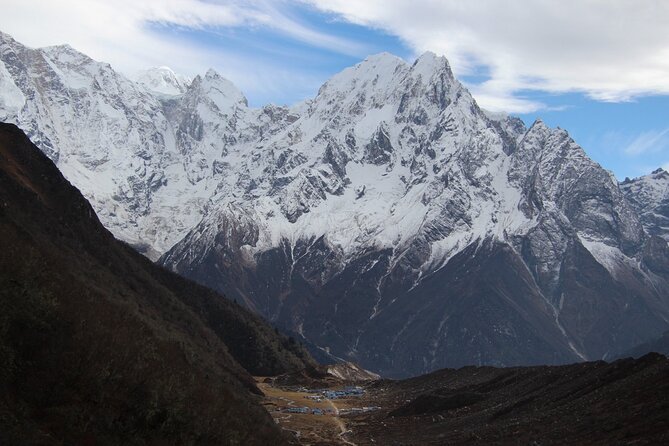
From the top, you can see Larkya, Mansiri, Cheo, and the Himlung Himal range. Then you descend with panoramic mountain and glacier views to Bimthang for the night.
This is the day where you feel why the package includes an oxygen meter, first aid, and evacuation support. Even with good preparation, altitude conditions can change quickly. The practical strategy is simple: follow your guide’s pacing, don’t try to “race the pass,” and treat the summit area like a place to manage effort, not prove fitness.
Bimthang to Dharapani, then back to Kathmandu via Besisahar
Day 11 is the last trek day: about 7 hours descending through pine and rhododendron forests to Dharapani. Snow-capped mountain views stay in your line of sight as you go lower.
Day 12 is mostly transport. You hike is done, and you switch to jeeps for about 4 hours to Besisahar. Then you board a bus to Kathmandu, driving along the Trishuli River and the Prithvi Highway, reaching Kathmandu with a transfer to your hotel.
This is where the circuit payoff lands: you go from cold, exposed high terrain back into the warmer human scale of fields and settlements.
The practical side: fitness, altitude pacing, and support you can rely on
Your route is listed for travelers with moderate physical fitness. That doesn’t mean it’s casual. The circuit includes days of 7–8 hours trekking, and the pass day is the obvious peak effort. Your best preparation is to arrive already able to hike for multiple hours with a daypack and to walk steadily at elevation.
Here’s what the package includes that helps you manage the “real life” problems:
- Oxygen meter: an explicit altitude safety tool included in your trek kit
- Water purification: reduces the guesswork for staying hydrated
- First aid and trek map: basics that matter when trails are remote and weather shifts
- Duffle bags: a structured way to pack and keep items organized
- Guide + porters: you’re not expected to carry everything yourself
Also, because this is a private trek, your pacing can be more realistic for your group. You’re not forced into a tempo that suits the fastest hikers in a mixed group.
Finally, expect weather dependence. The program notes say the experience requires good weather and may be rescheduled if conditions are poor around the trekking period.
Should you book this Manaslu Circuit trek?
I’d book this if you want a classic Manaslu experience with real cultural stops—Gurung community areas, Tibetan-style villages, and a gompa visit—while still getting solid back-end logistics (permits, guide, porters, water purification, and evacuation support). The private format is a strong fit if you value a calm pace and fewer hassles.
I’d think twice if you’re not comfortable with high-altitude trekking, especially the pass day. Even with support and safety tools, Larkya La is the type of challenge where your arrival fitness, patience, and weather tolerance matter.
If you decide to go, confirm two things before you pay:
1) the exact Kathmandu accommodation situation (the info provided lists it both ways), and
2) that your group has a clear plan for the cold around Samdo and the pass push.
FAQ
How much does the private Manaslu Circuit trek cost?
The price is $960.00 per person.
How long is the trek?
The duration is 12 days (approx.).
Where does the experience start and when?
It starts at Nepal Alternative Treks & Expeditions meeting point (Post Box No: 8169, House, Raniban Marg 136/205, Nagarjun, 01) with a start time of 7:15 am.
Is this a private tour?
Yes. It’s a private tour/activity, so only your group participates.
What permits and fees are included?
The package includes MCAP, ACAP, Local Entry fee, and the Manaslu Special permit.
Are guide and porters included?
Yes. One professional guide is included, plus required porters and their all expenses.
What altitude landmark does the trek cross?
The trek highlights crossing Larkya La Pass, listed as about 5106m in the overview and about 5160m in the day-by-day details.
What is included for meals?
Meals included are breakfast (12), dinner (11), and lunch (12).
What’s not included in the price?
Not included: travel insurance, tips for guide/porters, alcoholic drinks, tea/coffee, hot water, and hot shower, plus bar bills and other soft/hard table drinks.
What happens if I need to cancel or if weather is bad?
You can cancel up to 24 hours in advance for a full refund. The experience requires good weather; if it’s canceled due to poor weather, you’ll be offered a different date or a full refund.
More Trekking Out of Kathmandu
Private Days, Your Group Only

More Tour Reviews in Kathmandu
Just Reviewed in Kathmandu
- Mountain Bike Tour
★ 5.0 · 3 reviews - Annapurna Panaroma
★ 5.0 · 3 reviews - Mount Everest Scenic Flight 50 Minutes
★ 5.0 · 3 reviews - Kathmandu : Swambhunath & Durbar Square Guided Half Day Tour
★ 3.3 · 3 reviews - Chandragiri Cable Car & Monkey Temple Tour – Private/Group
★ 5.0 · 3 reviews - Kathmandu: Shivapuri National Park Hiking Day Trip
★ 3.3 · 3 reviews
Manaslu Circuit Treks, compared.
 ★ 5.0Manaslu Circuit TrekFrom $1,190292 reviews
Manaslu Circuit TrekFrom $1,081184 reviews
★ 5.0Manaslu Circuit Trek:From $1,099106 reviews
★ 5.0Manaslu Circuit TrekFrom $1,190292 reviews
Manaslu Circuit TrekFrom $1,081184 reviews
★ 5.0Manaslu Circuit Trek:From $1,099106 reviews
 ★ 5.0Manaslu Circuit Trek (15 Days)From $1,65750 reviews
Manaslu Circuit TrekkingFrom $1,49944 reviews
★ 5.0Manaslu Circuit Trek (15 Days)From $1,65750 reviews
Manaslu Circuit TrekkingFrom $1,49944 reviews
 ★ 5.016 Day Private Manaslu Circuit Trek from KathmanduFrom $1,13542 reviews
★ 5.0Manaslu Circuit TrekFrom $1,90035 reviews
★ 5.016 Day Private Manaslu Circuit Trek from KathmanduFrom $1,13542 reviews
★ 5.0Manaslu Circuit TrekFrom $1,90035 reviews
 ★ 5.0Manaslu Circuit Trek 13 DaysFrom $1,40030 reviews
Browse the lists this tour appears in