
Review · MANASLU CIRCUIT TREKS
Private Manaslu Circuit Trek at Himalayas
In This Review
- First impressions (and what matters)
- What you’re really buying with a private trek
- Key takeaways before you commit
- Manaslu Circuit Trek: what you’re actually stepping into
- Price and value: what $1,500 per person covers (and why it matters)
- Permits and restricted-area rules: why your trek needs the paperwork
- Days 1–4: the river start, narrow trails, and Namrung’s climb-in feel
- Days 5–7: Lho, Sama Gaon, and the base-camp acclimatization day
- Days 8–9: Samdo and the day-trip hike toward Tibet trade-pass views
- Days 10–11: Dharamshala lead-in and Larkya La at 5,160 m
- Days 12–13: the descent to Bimthang and the final drop to Dharapani
- Tea houses, meals, and why guide pacing changes everything
- What you should consider before booking
- Should you book this private Manaslu Circuit trek?
- FAQ
- How long is the Manaslu Circuit trek?
- Where does the trek start and end?
- What is the highest altitude on the itinerary?
- What permits are included?
- Is accommodation included during the trek?
- Are meals included?
- Is a porter included to carry my bag?
- Do I get trekking gear if I need it?
- What kind of medical/emergency support is included?
- What is the cancellation refund timeline?
First impressions (and what matters)
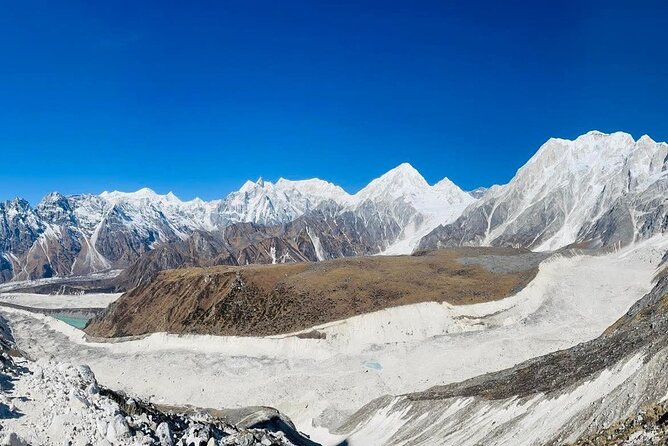
A quieter Himalaya trek awaits. The Manaslu Circuit Trek in Nepal strings together dramatic peak views, Tibetan-influenced villages, and long stretches with far fewer people than the headline routes—so your days feel slower and more personal. I like how the itinerary builds in acclimatization time (base camp and Samdo) and how the support from guides gets praised for pace-matching and safety (Yaka, Raj) while Laxman helps carry the heavy stuff.
The main drawback to weigh is altitude and effort. Even with help and tea house lodging, you’ll be hiking up to big passes (like Larkya La at 5,160 m), so you need a moderate fitness base and a calm, steady approach.
Just your group, at your own pace
- Private Kathmandu Sightseeing Tour | UNESCO World Heritage sites★ 5.0 · 756 reviews
- Kathmandu: Full Day 7 UNESCO Tour with Lunch – Private/Group★ 5.0 · 415 reviews
- Private Bhaktapur and Nagarkot Day Tour From Kathmandu★ 5.0 · 305 reviews
- Kathmandu: Full Day Top 4 UNESCO Tour with Lunch – Private/Group★ 5.0 · 269 reviews
What you’re really buying with a private trek
This is a private setup, so you and your group move together rather than getting swept into a larger herd. That also means the rhythm is easier for your guide to adjust—useful when the trail narrows, weather shifts, or you feel the altitude creeping in.
You’ll also appreciate that the trip includes the permits that are required for the Manaslu region, plus guided days and most of your meals during the trek. If you like your travel to feel organized without feeling scripted, this structure usually works well.
Key takeaways before you commit
- Licensed guide and team support: Professional trekking guide with government license (and insurance), plus strong real-world feedback on pace and safety from Yaka and Raj
- Altitude planning built into the schedule: Acclimatization at Manaslu Base Camp and a full day in Samdo
- Tea house / lodge nights included: You’re not figuring out beds every evening while climbing higher
- Permits are included: Manaslu Restricted Permit plus MCAP and ACAP
- Tea house trekking with real trade-offs: Lodging and meals are included, but drinks in the mountains are not
- Private by design: Only your group participates, which helps keep the experience calm and controlled
Manaslu Circuit Trek: what you’re actually stepping into
The Manaslu Circuit is the kind of trek that rewards people who like progression: you start in river valleys, work your way through villages, and then climb into high passes where the air gets thinner and the views get sharper. Over 13 days, you’ll move through changing elevations and local ways of life, with Tibetan Buddhist markers like monasteries, prayer wheels, and mani walls showing up along the route.
The best part is how many different “modes” you experience. One day can feel like a forest-to-meadow transition; another day is all about wide, open high-altitude trekking. You’re not just chasing mountain photos, though those are a major part of the appeal. You’re also walking past small settlements and crossing classic Himalayan terrain tied to older trade paths.
If you’re the type who likes to keep your day-by-day plan simple—walk, rest, eat, repeat—this itinerary format is a good fit. Just be ready for early mornings and steady climbing days, especially as you approach Larkya La.
Price and value: what $1,500 per person covers (and why it matters)
At $1,500 per person, you’re not just paying for “a walking route.” You’re paying for the hard parts that usually add up in Nepal treks: logistics, permits, a licensed guide, and the bulk of your trek-day meals and lodging.
Here’s what’s included that often makes the cost feel more fair:
- Kathmandu to Machha Khola by bus, and Dharapani to Kathmandu by bus
- Professional trekking guide with government license (with his insurance and food)
- Tea house / lodge accommodation during the trek
- Manaslu Restricted Permit, plus Manaslu Conservation Area Permit (MCAP) and Annapurna Conservation Area Permit (ACAP)
- Sleeping bag, down jacket, and duffle bag if necessary (returned after the trek)
- A well-equipped first aid kit and an oximeter
- Breakfast (13), lunch (13), dinner (12) during the trek
What you should budget separately:
- Meals in Kathmandu (only the trekking meals are clearly listed as included)
- Drinks during trekking (hard and soft drinks are not included)
- Porter for your bag (not included)
- Personal travel insurance (explicitly not included)
- Tipping your guide and porters
- International airfare and visa fees/taxes
For value, I’d focus on this: permits + licensed guiding + trek-day meals/lodging already cover a big chunk of typical “surprise costs.” If you also want a private experience, that pushes the price upward compared with group departures, but it often buys you a smoother pace and less hassle.
More trails out of Kathmandu, boots ready


Permits and restricted-area rules: why your trek needs the paperwork
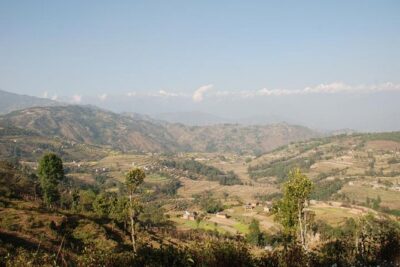
Manaslu is a restricted trekking region. That matters because it changes how the trek is run: you can’t just show up and wander the route. This tour includes the Manaslu Restricted Permit, plus conservation permits (MCAP and ACAP), which is exactly what you want in a place with entry controls.
It also explains one more detail: there’s a minimum of two people required to book this trek. That rule exists because the area is restricted, not because it’s a vague business policy.
Bottom line: if you want fewer headaches and more certainty about access, having the permits bundled into the package is a real advantage.
Days 1–4: the river start, narrow trails, and Namrung’s climb-in feel
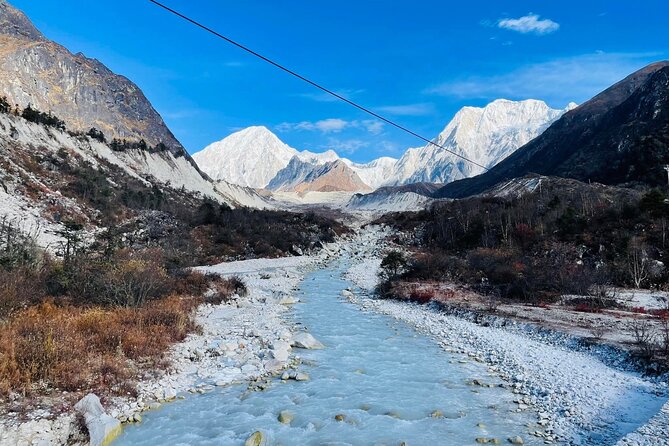
You begin with a bus drive from Kathmandu toward Machha Khola, which functions as the trek’s starting point. Day 1 is mainly travel (7–8 hours), with the max altitude around 1,400 m. This is a good day to treat as warm-up time rather than “make miles.”
Day 2 shifts into real walking (6–7 hours) with max altitude around 1,410 m in Jagat. You’ll cross the Tharo Khola on a narrow trail, and there’s a hot spring along the route. That hot spring moment is the kind of practical reward that keeps morale up when the trail is still low but active.
Day 3 brings you toward Pewa, with travel time about 7 hours and max altitude near 1,860 m. The route keeps feeding you gradual elevation rather than jumping straight upward, which makes the next days feel more reasonable.
Day 4 heads to Namrung (max altitude 2,630 m) with a 6-hour travel block. By now, you’re in that stage where the air feels different in the morning, and the villages feel more “trekking-real” than tourist-loud.
Practical note: early on, don’t chase speed. Save energy for the higher days when the breathing gets the final say.
Days 5–7: Lho, Sama Gaon, and the base-camp acclimatization day
Day 5 is shorter by trekking standards (about 4 hours), but the max altitude jumps to 3,180 m at Lho. That combination—less walking, higher ground—usually feels like your body is being asked to adapt without exhausting you.
Day 6 moves to Sama Gaon (max altitude 3,530 m) with about 7 hours of travel on paper. You’re now in a higher village zone where the rhythm becomes: walk steadily, stop often, and keep hydrated.
Then comes Day 7, the acclimatization day at Manaslu Base Camp (max altitude 4,400 m). This is the kind of day that often separates a tough trek from a miserable one. Rather than forcing immediate altitude gains, you’re given time to adjust and reduce the risk of rushing your body.
I like that the schedule respects altitude reality. If you’ve ever underestimated how quickly mountain air can change how you feel, you’ll appreciate having this buffer built in.
Days 8–9: Samdo and the day-trip hike toward Tibet trade-pass views
Day 8 takes you to Samdo (max altitude 3,690 m) with about 4–5 hours of trekking. The description highlights that you descend to the Budhi Gandaki River and head back toward Manaslu Base Camp—so it’s not just “up, up, up.” This is also where the route starts feeling like a full circuit rather than a straight climb.
Day 9 stays at Samdo (max altitude again 3,690 m) for another acclimatization day. You’ll explore the village and have the option to hike up the valley toward one of the trade passes to Tibet for excellent views. The key value here is choice plus time. You’re not locked into a forced mileage target; you’re adapting to altitude while still getting payoff views.
This is also the part of the trek where Tibetan Buddhist details can feel more vivid because you’re slower and looking around, not just moving.
Days 10–11: Dharamshala lead-in and Larkya La at 5,160 m
On Day 10, you trek toward Dharamshala (max altitude 4,460 m) with about 4–5 hours walking. You’ll cross a wooden bridge over the Budhi Gandaki, then cross two streams. Small moments like this are helpful to remember: high altitude can make simple crossings feel longer, and your pacing matters.
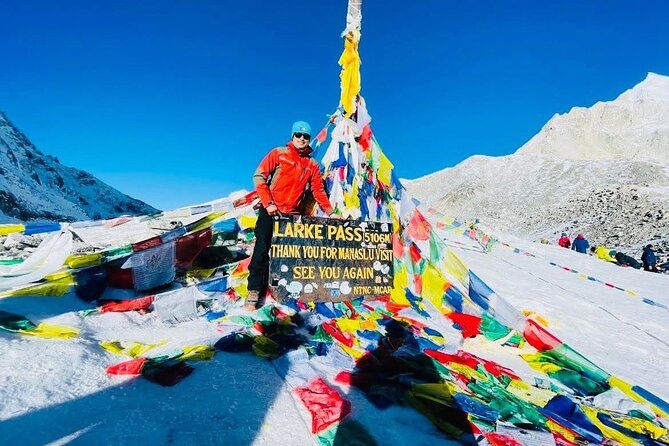
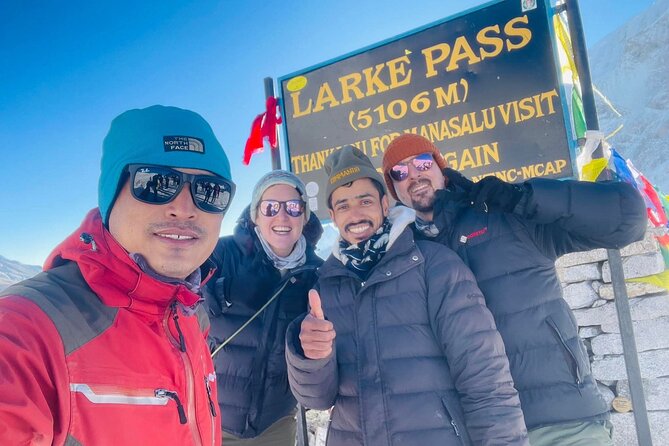
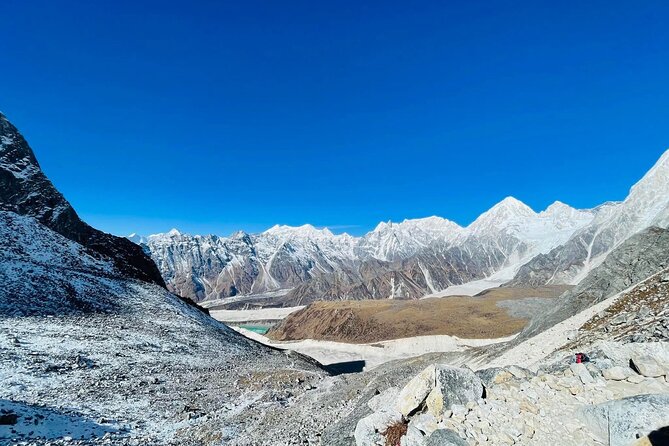
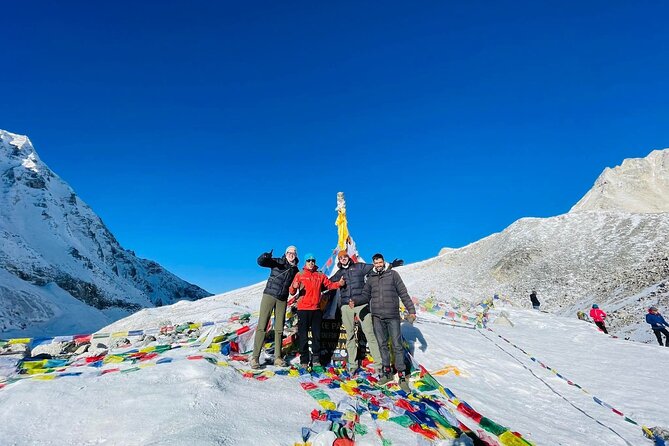
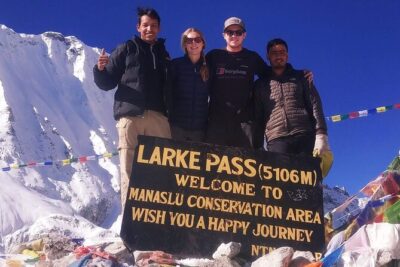
Day 11 is the big day: you reach Larkya La Pass with a max altitude around 5,160 m. The itinerary notes you’ll reach a valley after a short walk, with views of Cho Danda and Larkya Peak, and that the trail heads through moraines of the glacial area. This is classic high-mountain trekking—less about village life, more about footing, wind awareness, and patience.
Here’s the real strategy: treat pass days like a steady rhythm project, not a speed contest. If you keep steps small and breathing calm, you’ll usually arrive with more energy for the views and less energy-drain for the descent.
Also, plan mentally for cold. The higher you go, the more comfort depends on layered clothing and how quickly you can adjust when you stop walking.
Days 12–13: the descent to Bimthang and the final drop to Dharapani
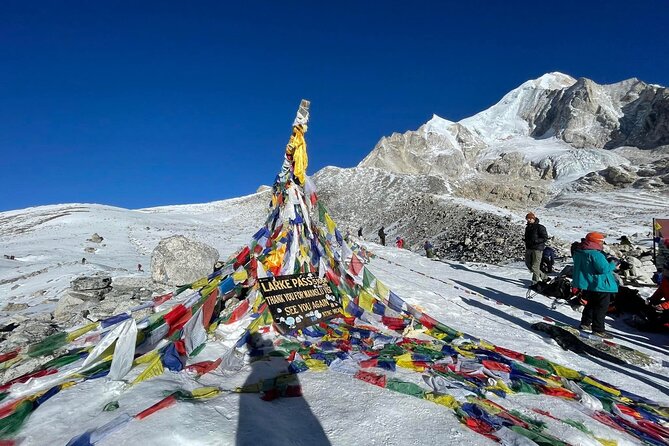
Day 12 is described as return travel, with about 9 hours and max altitude 3,720 m at Bimthang. This day matters because it’s where you transition from “high altitude success mode” into “long downhill patience.” Your legs will feel it even if the distance seems manageable.
Finally, Day 13 drops you to Dharapani (max altitude 1,963 m) with 8–10 hours of travel. It’s a long wrap-up day—enough time to feel the trek ending, but still structured and supported so you’re not left planning transport on your own.
When this last day is done, you’ll have the mental clarity that comes from finishing a serious circuit rather than doing a quick out-and-back.
Tea houses, meals, and why guide pacing changes everything
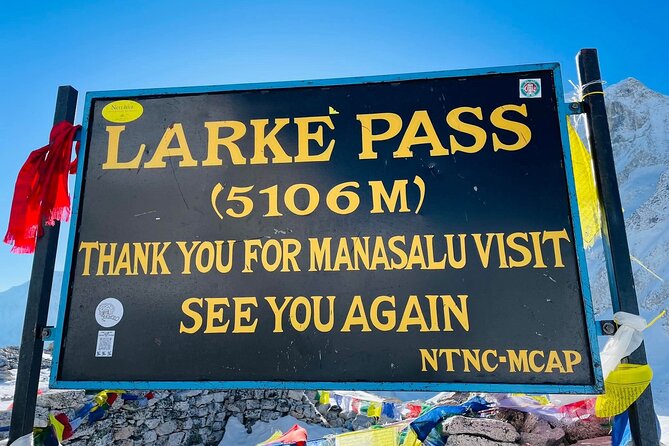
Tea house trekking sounds simple on paper: you walk, sleep, eat. In real life, what makes it good is consistency. This tour includes tea house / lodge accommodation and trek meals: breakfast, lunch, and dinner on the trek days listed.
That means you can focus on trail time, not “where will we eat and what will we find tonight.” You still need to decide what you drink (drinks during trekking aren’t included), but you won’t be scrambling for basic nutrition.
The guide support has also stood out in recent feedback. Guides named Yaka and Raj have been praised for matching walking pace, staying organized, and keeping the group comfortable and safe. Laxman is also mentioned for carrying bags, which matters more than people think. When your pack feels lighter, you keep better posture, and your altitude day feels less punishing.
Even in a private trek, the guide’s pacing is the difference between feeling steady and feeling wiped out. If you like your days planned but not micromanaged, this setup likely fits.
What you should consider before booking
This trek is best for people with moderate physical fitness. The itinerary includes long travel blocks and multiple high-altitude days, with Larkya La at 5,160 m. Even with acclimatization days, your body will still need time to adjust.
You’ll also want to be comfortable with tea house style lodging, and you should pack for a cold, high pass day. The tour offers gear support (sleeping bag, down jacket, duffle bag) if necessary, which can reduce what you need to bring from abroad.
Finally, check your expectations around Kathmandu. Meals in Kathmandu aren’t included, and upgraded accommodation there isn’t listed as part of the package. If you want a fancy pre- or post-trek hotel, you’ll likely need extra planning.
Should you book this private Manaslu Circuit trek?
I’d book it if you want a private, guided Manaslu experience where permits and trek-day logistics are handled, and where the itinerary makes room for altitude acclimatization instead of pretending your body can ignore physics. The strong emphasis on safety, pace-matching, and helpful bag-carrying shows up clearly in guide-focused feedback.
I’d think twice if you’re not ready for a high pass day at 5,160 m or if you want a fully hands-off trip with no physical effort. This trek does the support part well, but it still expects you to hike.
If you’re planning your first serious Himalayan trek, consider this: the circuit nature, village time, and built-in acclimatization days make it feel like a real journey, not just a checklist hike.
FAQ
How long is the Manaslu Circuit trek?
The duration is listed as 13 days (approx.).
Where does the trek start and end?
You drive from Kathmandu to Machha Khola to start, and you return from Dharapani to Kathmandu by bus.
What is the highest altitude on the itinerary?
The itinerary lists the highest point as Larkya La Pass at 5,160 m (Day 11).
What permits are included?
The tour includes the Manaslu Restricted Permit and conservation permits: MCAP (Manaslu Conservation Area Permit) and ACAP (Annapurna Conservation Area Permit).
Is accommodation included during the trek?
Yes. Tea House / Lodge Accommodation during the trek is included.
Are meals included?
During the trek, breakfast (13), lunch (13), and dinner (12) are included. Meals in Kathmandu are not included.
Is a porter included to carry my bag?
No. A porter for your bag is not included.
Do I get trekking gear if I need it?
Yes. Sleeping bag, down jackets, and duffle bag are provided if necessary, and they are returned after the trek.
What kind of medical/emergency support is included?
The tour includes a well-equipped first aid kit and oximeter. In case of emergency, a helicopter service will be arranged and paid through your travel insurance.
What is the cancellation refund timeline?
You can cancel up to 6 days in advance for a full refund (and smaller refunds apply if you cancel 2–6 days before start time; no refund if under 2 days).
More Trekking Out of Kathmandu






Private Days, Your Group Only

More Tour Reviews in Kathmandu



Just Reviewed in Kathmandu
- Mountain Bike Tour
★ 5.0 · 3 reviews - Annapurna Panaroma
★ 5.0 · 3 reviews - Mount Everest Scenic Flight 50 Minutes
★ 5.0 · 3 reviews - Kathmandu : Swambhunath & Durbar Square Guided Half Day Tour
★ 3.3 · 3 reviews - Chandragiri Cable Car & Monkey Temple Tour – Private/Group
★ 5.0 · 3 reviews - Kathmandu: Shivapuri National Park Hiking Day Trip
★ 3.3 · 3 reviews
Manaslu Circuit Treks, compared.
 ★ 5.0Manaslu Circuit TrekFrom $1,190292 reviews
Manaslu Circuit TrekFrom $1,081184 reviews
★ 5.0Manaslu Circuit Trek:From $1,099106 reviews
 ★ 5.0Manaslu Circuit Trek (15 Days)From $1,65750 reviews
Manaslu Circuit TrekkingFrom $1,49944 reviews
 ★ 5.016 Day Private Manaslu Circuit Trek from KathmanduFrom $1,13542 reviews
★ 5.0Manaslu Circuit TrekFrom $1,90035 reviews
 ★ 5.010 Days Manaslu Circuit Trek in Larke La PassFrom $1,04930 reviews
Browse the lists this tour appears in