
Review · ANNAPURNA BASE CAMP TREKS
10 Days Private Annapurna Base Camp Trek
That blue-white glacier wall at Annapurna Base Camp is the big draw. This 10-day private trek layers in a lot more than altitude bragging: you’ll walk beside the Modi River, pass terraced farm towns, and spend time in Gurung villages with real culture behind the postcard peaks.
I especially like the pacing on most days, with walking hours that feel realistic for a moderate fitness level when you’ve got good guidance and break times. And the private setup matters too: it’s just your group, with a license-holder guide and porter support (with a 2 clients to 1 porter ratio) so you’re not just “touring,” you’re trekking with help.
The one caution: this trek can feel tough for amateur walkers because there are steep bits and some long days—one review even called it difficult for beginners. If you’re worried, plan on a slower pace, good trekking shoes, and a willingness to stop often.
In This Review
- Key Things That Make This Trek Worth Your Time
- First Stop: Kathmandu to Pokhara With Mountain Road Views
- Ghandruk Day: Easy Warm-Up Steps and Gurung Village Life
- Chhomrong: The Gateway Town That Feels Like a Milestone
- Himalaya Hotel and the Modi River Gorge: Forest Walking With Real Atmosphere
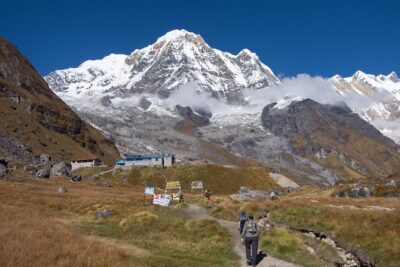
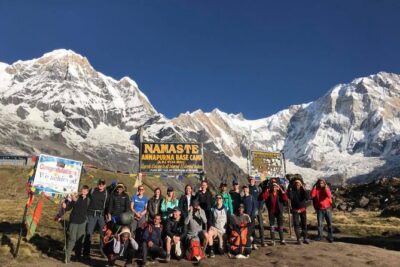
- Annapurna Sanctuary and Base Camp: Glacier Views That Actually Hit
- Sinuwa and Bamboo: Long Downhill Recovery Without Losing the Day
- Jhinu Danda Hot Springs: The Reward Day You’ll Appreciate
- Landruk and the Tolka Views: When the Trek Starts Looking Wider
- Dhampus Finish: Big Panorama Ending Before You Hit Pokhara
- Day 10 Back to Kathmandu: Flight or Bus, Choose What Your Body Wants
- Price and Value: What You Get for $1,100 Per Person
- Guides Matter Here: The Human Part of the Trek
- Who This Trek Fits Best (and Who Should Think Twice)
- Should You Book This Annapurna Base Camp Trek?
- FAQ
- How long is the Annapurna Base Camp trek?
- Where does the tour start and end?
- Is pickup included?
- What does the trek include for meals and lodging?
- Are trekking permits and the TIMS card included?
- Do I get a guide and porter?
- What about Kathmandu extra nights?
- What physical fitness level do I need?
- Is the trek dependent on weather?
- What if the trek can’t run because of traveler minimums?
Key Things That Make This Trek Worth Your Time
- Modi River walking: you’ll repeatedly follow the river through forests, bamboo, and gorge sections
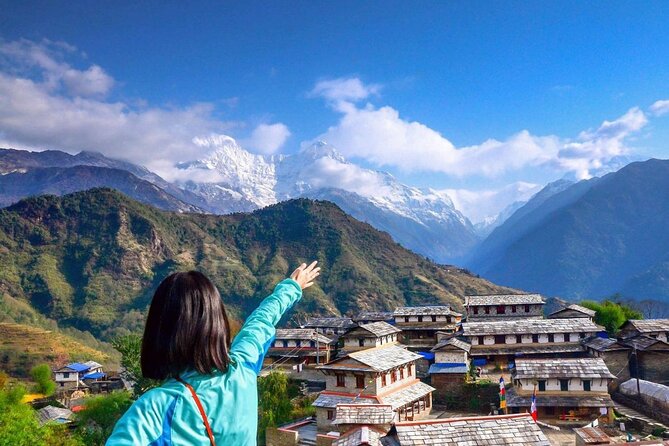
- Ghandruk cultural stop: Gurung Village, a local museum, and ACAP headquarters help you understand what you’re seeing
- Forest-to-alpine switch: bamboo, rhododendron, and oaks give way to higher sanctuary vegetation
- Annapurna Base Camp payoff: huge glacier views plus a ring of white peaks, including Annapurna I, III, South, and Fishtail
- Jhinu Danda hot springs: a real, practical reward day after day trekking
Just your group, at your own pace
- Private Kathmandu Sightseeing Tour | UNESCO World Heritage sites★ 5.0 · 756 reviews
- Kathmandu: Full Day 7 UNESCO Tour with Lunch – Private/Group★ 5.0 · 415 reviews
- Private Bhaktapur and Nagarkot Day Tour From Kathmandu★ 5.0 · 305 reviews
- Kathmandu: Full Day Top 4 UNESCO Tour with Lunch – Private/Group★ 5.0 · 269 reviews
First Stop: Kathmandu to Pokhara With Mountain Road Views
Your trip starts in Kathmandu (Thamel, View Nepal Treks & Expedition P. Ltd.), then you head to Pokhara by private drive. This is one of those transfers that matters on a trek like this, because it sets your rhythm: you’re moving, watching Nepal’s hills change, and getting your bearings before the walking begins.
On the road, you’ll pass local villages and get sightlines over hills and mountains. The route also runs by the Trisuli and Marsyangdi river areas, so it doesn’t feel like dead travel time. It’s a good day to keep expectations simple: you’re arriving fresh, not trying to “see everything.”
One small practical note: the tour includes pickup offered and uses a mobile ticket, so you’ll want to keep your phone charged and ready for updates.
Ghandruk Day: Easy Warm-Up Steps and Gurung Village Life
The trek really begins once you drive beyond Pokhara’s valley toward the Annapurna region. You start with a mix of gentle walking and gradual effort, including an easy start along the Modi River to Syauli Bazaar, then a climb using stone-paved steps toward Kimche and onward to Ghandruk.
What I’d call the standout here isn’t just the view—though Annapurna South and Fishtail (Machhapuchare) show up in the mix—it’s how the day gives you context. In Ghandruk, you can visit the Gurung local museum and see ACAP headquarters, which helps you connect the trekking experience to conservation and community life. You’ll also meet local people in this Gurung village, and that multi-cultural feel is part of why this route works.
Watch for your body on this day: some early climbing means you should go slow from the start. You’re setting up the pattern for the next week.
Chhomrong: The Gateway Town That Feels Like a Milestone
After your first big village day, you move through a chain of stops including Kyomrong and Chomro, then descend toward the river before climbing again toward Chhomrong. This is the kind of day that teaches you a trek skill fast: handle the downhills carefully, then use steady uphill breathing rather than power-walking.
Chhomrong matters because it’s described as the last permanent Gurung village and a gateway into the Annapurna Sanctuary/Base Camp approach. That means you’re not just “getting higher,” you’re stepping into a more focused trekking zone where the air tends to feel different and the vegetation changes.
A possible drawback on days like this: if you push too hard early, the next forest segments can feel heavier. Your win here is pacing, not speed.
Himalaya Hotel and the Modi River Gorge: Forest Walking With Real Atmosphere
From Chhomrong, the route shifts into a long day of variety. You descend over terraced farm fields, cross bridges, then climb through forest. You’ll pass through places like Sinuwa-Danda, and then move into dense sections where bamboo, rhododendron, and oaks show up in the middle of the trekking feel.
The overnight option at Himalaya Hotel is in the middle of a forested gorge above the Modi River. That location is the sort of detail that makes evenings different here: you’re not just in a lodge, you’re in the ecosystem your trek is cutting through.
Practical takeaway: forest days can trick you into thinking the hike is easier. The trail can still be uneven, and weather can change faster once you’re in tree cover. Keep trekking poles handy if you use them.
More trails out of Kathmandu, boots ready
Annapurna Sanctuary and Base Camp: Glacier Views That Actually Hit
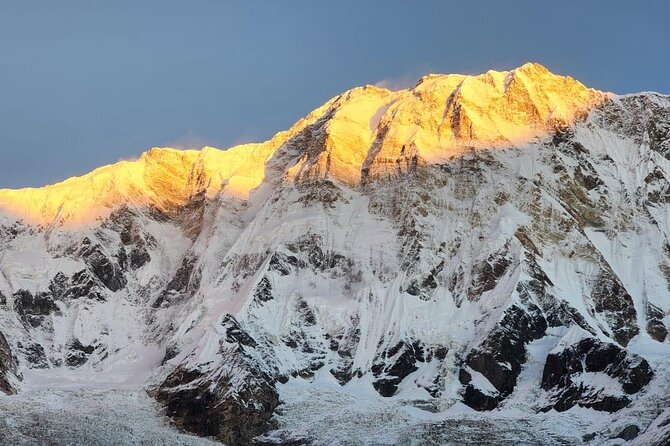
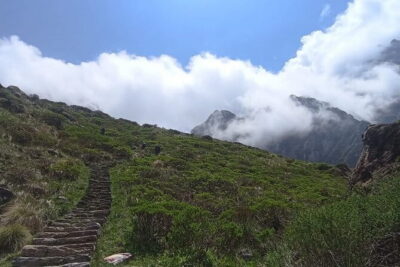
You arrive at the moment most people are trying to reach: the sanctuary and then Annapurna Base Camp. From Himalaya Hotel, the route rises into higher vegetation zones where tree lines drop and alpine bushes and shrubs appear.
You follow the Modi River upstream toward its source at the base camp area. The walking gets better in some stretches, but the key moment is the last steep climb toward Machhapuchare Base Camp, followed by a short push into the main destination.
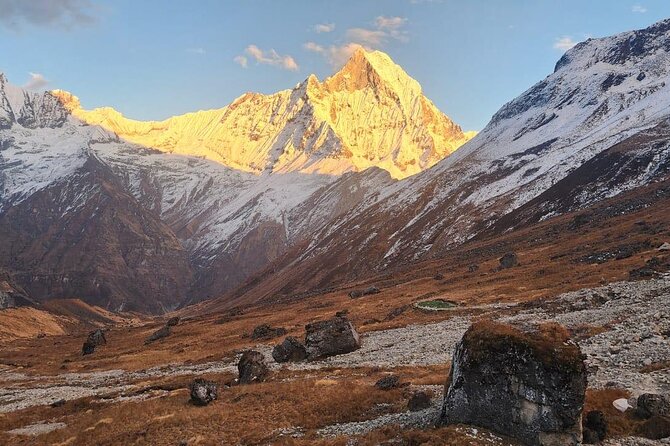
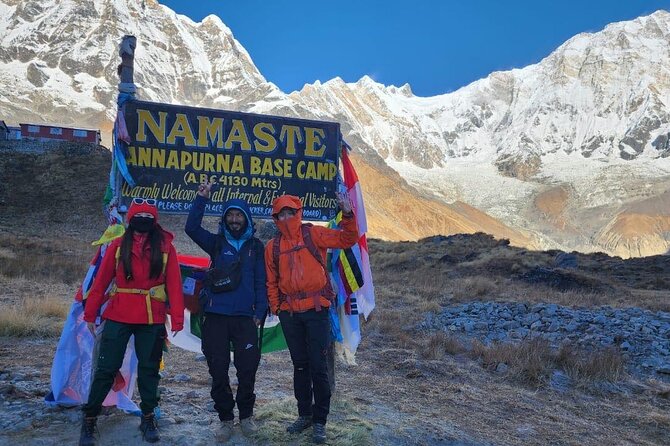
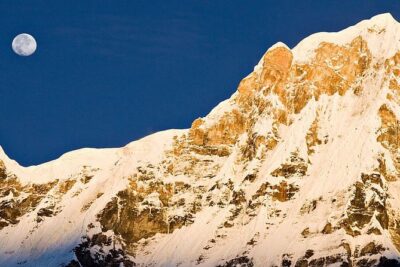
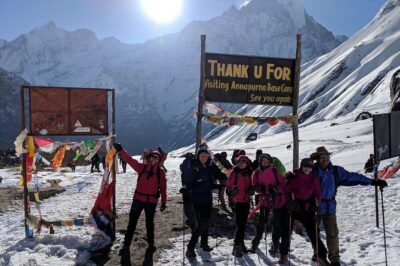
Then you see it: a huge Annapurna glacier and a valley ringed with big white peaks, including Annapurna I, Annapurna III, Annapurna South, and Fishtail. This is the point where the trek stops being a checklist and becomes a visual lesson. The sanctuary layout makes you feel surrounded, not just looking at one mountain across a valley.
One thing to plan for: weather. This experience requires good weather, and that affects what you can actually see around camp.
Sinuwa and Bamboo: Long Downhill Recovery Without Losing the Day
After enjoying the Base Camp area, the next phase is about coming down. The route descends to Deurali, passes Machhapuchare Base Camp, then works back into greener forested sections to reach Bamboo for overnight.
This is where you’ll feel the physics of trekking. Downhill can be easier on your breathing but harder on your knees and feet. You’ll likely want supportive boots and good sock choices. Also, since this is a river gorge route with vegetation changes, keep your eyes open for trail conditions (slippery sections, wet stones, and sudden fog).
The good news: this area is described as a temporary settlement of lodges in bamboo and rhododendron forest by the Modi River—so it feels like a real trekking base, not just a random stop.
Jhinu Danda Hot Springs: The Reward Day You’ll Appreciate
From Bamboo, the next morning includes a short steep climb to Khuldi Ghar, then a winding downhill into dense forest back toward Sinuwa-Danda and onward. The route drops to Chomrong khola, crosses a bridge, and climbs to Chomrong village for a rest or lunch stop. After that, you climb to the top of the Chomrong ridge and descend to Jhinu-Danda.
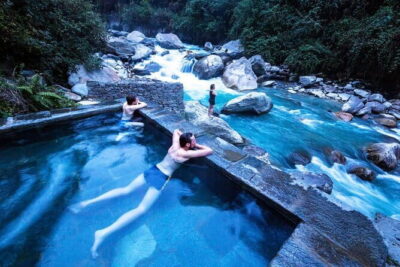
And here’s the practical win: Jhinu Danda has hot springs about 20 minutes’ walk downhill near the Modi River. After several days of footwork, soaking is the kind of “I’m glad I planned this” reward that makes the trek feel complete.
If you’re going, keep the hot springs time modest. You want to recover, not freeze and re-cook your legs. Also, confirm lodge guidance on timing if it’s cold or if the weather shifts.
Landruk and the Tolka Views: When the Trek Starts Looking Wider
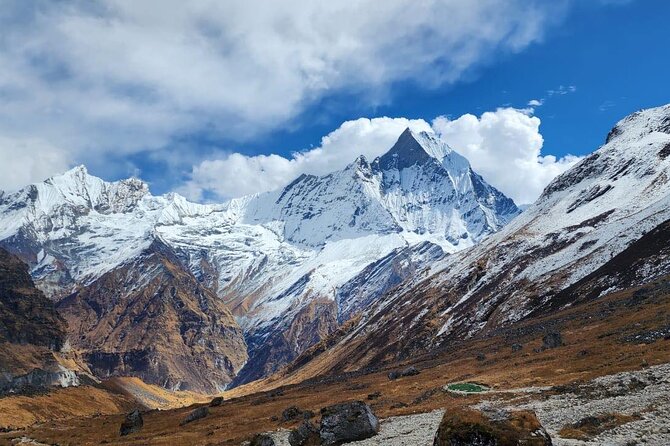
The next move takes you from Jhinu into a longer descent along the Modi River, including a suspension bridge crossing and walks past farm fields. Then there’s a short climb to Landruk, followed by gentle winding walking to Tolka.
This stretch starts to broaden your sense of the mountains. You’ll have views of Annapurna South and Huinchuli from Tolka, and it helps you shift mentally from “reach the next place” to “enjoy the view from the trail.”
A possible consideration: some downhills mean more time with your legs under load. If you’re prone to shin splints, slow your pace on the steep bits.
Dhampus Finish: Big Panorama Ending Before You Hit Pokhara
From Tolka, you continue with a gradual trail and some short ups and downs, passing Bheda Kharka. There’s also an hour-or-less climb into forest to Deurali, where you get wide views including Dhaulagiri, Annapurna South, Huinchuli, and Machhapuchare, plus sightlines toward Ghandruk village.
Then you descend through forest to Pothana, and finally to Dhampus, which is set up for panoramic views of Annapurna–Manaslu–Lamjung with Machhapuchare visible. After that, you continue downhill to Phedi and take a short drive back to Pokhara.
This “last day downhill” matters more than it sounds. It lets you end on scenery and motion, then recover in real beds. The tour gives you time to relax in Pokhara after the big high point.
Day 10 Back to Kathmandu: Flight or Bus, Choose What Your Body Wants
Your final day returns to Kathmandu, either by scenic flight or by tourist bus in the morning with an afternoon arrival. This flexibility is practical: after ten days of walking, you might prefer the speed of a flight, or you might want the cheaper, simpler option of a bus if you’re feeling low-stress.
Either way, plan a calm evening. You’ll want time for final shopping and some real food that doesn’t come with trek-portions.
Price and Value: What You Get for $1,100 Per Person
At $1,100 per person, the value here comes from what’s bundled and how it reduces friction.
Here’s what’s covered based on the tour details:
- License holder guide and porter support (2 clients: 1 porter)
- Meals during the trek: breakfasts, lunches, dinners (counts are included in the package)
- Accommodation during the trek
- Pokhara rooms via private transport (and additional night coverage tied to Pokhara/Phedi-Pokhara routing)
- Trekking permit and TIMS card
- Guide/porter food, salary, transport, insurance
- Private transport for key legs like Pokhara Nayapul and Phedi-Pokhara
That’s not just “stuff included.” It’s also less negotiation every day. Permits handled, meal planning handled, and food and insurance arranged. If you’ve ever tried to DIY this kind of trek during a busy season, you know how quickly small chaos adds up.
What you should budget separately:
- Drinks, grocery items, and tips
- If you need extra nights in Kathmandu, there’s an added cost noted at $40 per night
So is it worth it? For most people who want a guided, permit-handled Annapurna Base Camp route without daily logistics headaches, this pricing is in the practical zone—especially with the private-group feel.
Guides Matter Here: The Human Part of the Trek
The tour’s reputation strongly points to guide quality. Names that show up in the feedback include Kumar, praised as funny and helpful, with strong local knowledge, and Sukman, described as warm, responsive, and attentive. There’s also mention of Pande and his team delivering professional service.
Even if you don’t care about personalities, you should care about decision-making. In a trek like this, your guide influences pace, safety habits, and how you handle the steep or muddy sections. Porter support also changes the experience quickly—your legs feel the difference.
If you book, I’d ask early who your guide will be and confirm what you want most: steady pace, more cultural stops, or extra time to enjoy views.
Who This Trek Fits Best (and Who Should Think Twice)
This trek suits you if:
- you’re aiming for Annapurna Base Camp with village life, riverside walking, and forest-to-sanctuary change
- you want a private group setup with a guide and porter
- you’re comfortable with moderate fitness, plus the reality that some days will feel challenging
It may not be ideal if:
- you’re a brand-new walker and expect flat, easy effort the whole time (one review flagged it as difficult for amateur walkers)
- you’re sensitive to knee stress on repeated downhills
- you’re not ready for weather-based changes (the experience needs good weather to shine)
Should You Book This Annapurna Base Camp Trek?
I’d book this trek if you want a guided Annapurna Base Camp route that doesn’t forget the “in-between” parts—river walks, Gurung village culture in Ghandruk, forest days by the Modi River, and that hot-springs recovery stop at Jhinu Danda. The included permits, meals, and transport reduce the kind of friction that can make a trek feel heavier than it should.
Before you say yes, check your walking comfort realistically. If you can handle a few steeper climbs and long-ish days, this plan is a strong match. If you’re nervous, tell your guide on day one you want a slower pace and more rests. This is exactly the kind of trek where good pacing beats hero mode.
FAQ
How long is the Annapurna Base Camp trek?
The trek runs about 10 days.
Where does the tour start and end?
It starts at View Nepal Treks & Expedition P. Ltd. in Thamel, Kathmandu, and ends back at the same meeting point.
Is pickup included?
Pickup is offered.
What does the trek include for meals and lodging?
The package includes trekking breakfast, lunch, and dinner, plus accommodation during the trekking days. It also includes 2 night rooms in Pokhara related to the route, using private transport.
Are trekking permits and the TIMS card included?
Yes, trekking permits and TIMS card are included.
Do I get a guide and porter?
Yes. The package includes a license holder guide and porter, with a ratio of 2 clients to 1 porter.
What about Kathmandu extra nights?
If you need additional accommodation in Kathmandu, it costs $40 USD extra per night.
What physical fitness level do I need?
The tour notes a moderate physical fitness level.
Is the trek dependent on weather?
Yes. The experience requires good weather, and if canceled due to poor weather you’ll be offered a different date or a full refund.
What if the trek can’t run because of traveler minimums?
It requires a minimum number of travelers. If it’s canceled due to the minimum not being met, you’ll be offered a different date/experience or a full refund.
More Trekking Out of Kathmandu
Private Days, Your Group Only

More Tour Reviews in Kathmandu
Just Reviewed in Kathmandu
- Mountain Bike Tour
★ 5.0 · 3 reviews - Annapurna Panaroma
★ 5.0 · 3 reviews - Mount Everest Scenic Flight 50 Minutes
★ 5.0 · 3 reviews - Kathmandu : Swambhunath & Durbar Square Guided Half Day Tour
★ 3.3 · 3 reviews - Chandragiri Cable Car & Monkey Temple Tour – Private/Group
★ 5.0 · 3 reviews - Kathmandu: Shivapuri National Park Hiking Day Trip
★ 3.3 · 3 reviews
Annapurna Base Camp Treks, compared.
 ★ 5.0Annapurna base camp trek 5 DaysFrom $699252 reviews
 ★ 5.014-Day Private Annapurna Base Camp TrekFrom $1,090180 reviews
 ★ 5.0Annapurna Base Camp TrekkingFrom $1,779116 reviews
 ★ 5.0Annapurna Base Camp TrekFrom $935111 reviews
★ 5.0Annapurna Base Camp TrekFrom $1,350107 reviews
★ 5.0Annapurna Base Camp TrekFrom $935111 reviews
★ 5.0Annapurna Base Camp TrekFrom $1,350107 reviews
 ★ 5.0Kathmandu to Annapurna Base Camp (ABC) 5-Day TrekFrom $99102 reviews
 ★ 5.0Annapurna Base Camp Trek- 11 DaysFrom $99990 reviews
 ★ 5.0Annapurna Base Camp Trek 12 DaysFrom $80085 reviews
Browse the lists this tour appears in